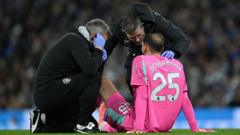
Sydney, Australia – A cloud of defensive uncertainty hangs heavy over Anfield, as Liverpool grapple with a centre-back conundrum that threatens to derail their Premier League ambitions. With seasoned campaigners showing signs of vulnerability and emerging talents yet to fully solidify their positions, the pressure is mounting on new manager Andoni Iraola to find a solution that restores the Reds' once-impervious backline.
BBC Sport, in a recent analysis, highlighted the pressing need for Iraola to act decisively, a sentiment echoing across the footballing world. The former Bournemouth boss, known for his tactical astuteness, inherits a squad brimming with attacking talent but seemingly short on defensive cohesion – a critical flaw for any team eyeing the top honours in English football.
The Ageing Guard and Emerging Hopes
The defensive heartbeat of Liverpool for so long, Virgil van Dijk, remains a colossal figure. However, at 33, questions linger over his sustained ability to dictate play and maintain peak performance across a gruelling campaign. His partnership with Ibrahima Konaté, while intermittently effective, has sometimes lacked the consistent, unyielding strength that characterised Liverpool's golden era under Jurgen Klopp. Konaté, still only 25, possesses immense potential but has been plagued by niggling injuries, preventing him from cementing a prolonged run of form. Joe Gomez, a stalwart for many seasons, offers versatility but has struggled to establish himself as a primary centre-back option in recent times, often deployed in full-back roles.
Then there's the emerging talent of Jarell Quansah, whose impressive breakthrough season hinted at a bright future. Yet, at 21, relying on a relatively unproven commodity to shoulder the defensive burden of a title-chasing side is a significant ask. The blend of experience and youth is certainly present, but the harmony and unwavering reliability appear to be missing, leading to moments of collective anxiety for the Anfield faithful.
Iraola's Tactical Blueprint: A Defensive Overhaul?
Andoni Iraola's appointment was met with considerable excitement, largely due to his reputation for implementing an aggressive, high-pressing style of football at Bournemouth. While this philosophy is often associated with attacking verve, its success fundamentally relies on a rock-solid defensive structure that can cope with transitions and maintain shape under pressure. BBC Sport's assessment suggests Iraola faces a tough balancing act: integrating his attacking principles while simultaneously fortifying a defence that has, at times, looked susceptible.
One immediate area of focus for Iraola will be to impart a clearer defensive strategy that minimises individual errors and cultivates a more robust collective unit. This could involve stringent training ground drills focusing on positioning, communication, and decision-making under duress. The objective is not just to plug gaps but to instil a more proactive, organised approach to defending.
Transfer Market Manoeuvres: A Costly Conundrum
The most direct, albeit expensive, solution to Liverpool's defensive woes would be an injection of fresh talent in the transfer market. However, the economic landscape of Premier League football dictates a cautious approach. Quality centre-backs command hefty fees, often upwards of 80 million Australian dollars (£40 million), making judicious spending paramount. Sources close to the club indicate that while the transfer committee is active, a major outlay on a centre-back would need to align perfectly with Iraola's vision and the club's long-term financial strategy.
Potential targets could include established European talents known for their aerial prowess, pace, and ability to play out from the back. However, Iraola may first explore internal solutions, meticulously assessing players on the fringes or those returning from loan spells, hoping to unearth a hidden gem before dipping into the club's significant, but not bottomless, coffers. The pre-season will be crucial for Iraola to evaluate his current options and determine if a significant transfer market intervention is indeed necessary to plug the defensive leaks and chart a course for silverware.