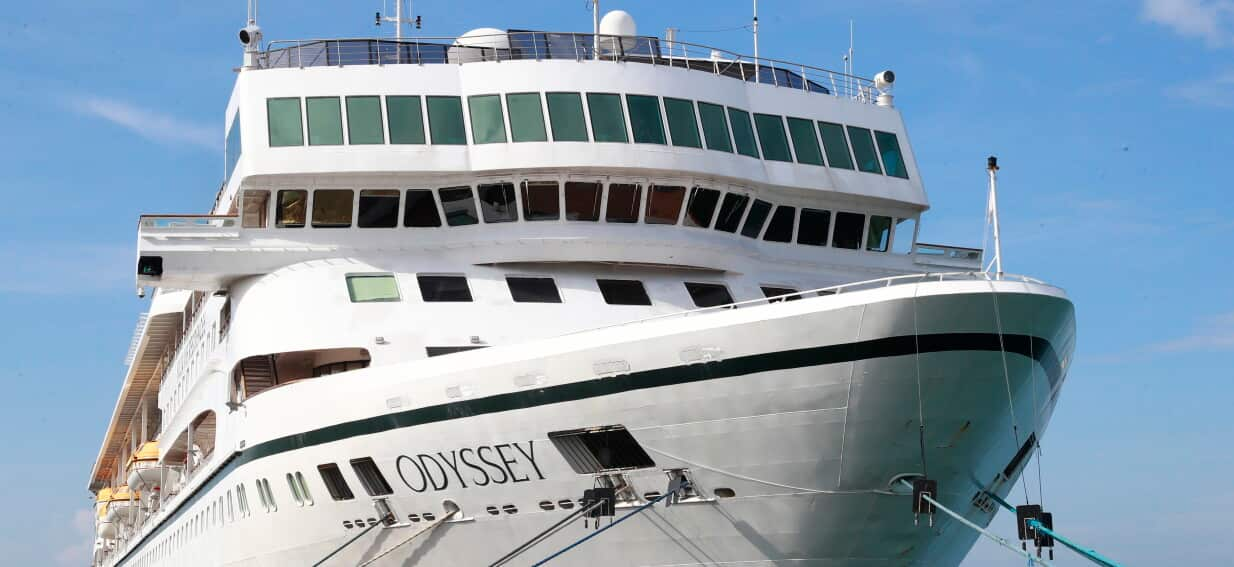
Scores of international travellers who staked their life savings on an endless luxury voyage around the world are stranded in Cambodia after the residential cruise ship Odyssey abruptly ran out of funds.
The ambitious venture, marketed as a perpetual lifestyle at sea for retirees and nomadic professionals, ground to an unceremonious halt when the vessel was forced to dock in Cambodia as its parent operator exhausted remaining cash reserves.
Financial shipwreck in Cambodian waters
Passengers aboard the Odyssey, who paid hundreds of thousands of dollars for long-term leases and multi-year cabins, now face an uncertain future far from home. Port authorities in Cambodia confirmed the vessel was tied up after operational debts mounted, leaving suppliers unpaid and maritime services suspended.
As SBS News Top Stories reported, the sudden stranding followed a succession of compounding warning signs that had plagued the ambitious operation for months, culminating in a total collapse of operating capital in Southeast Asia.
The financial breakdown has left residents—many of whom sold property, liquidated assets, and surrendered domestic leases in countries including Australia to fund their sea-bound retirements—facing logistical abandonment in a foreign port.
Red flags mounted before final breakdown
The vessel's arrival in Cambodia was the climax of an increasingly troubled itinerary. According to reports, the ship had been shadowed by administrative headaches, delayed departures, and itinerary cuts since embarking on its global programme.
Cabins on the residential liner were marketed at rates ranging from roughly $150,000 AUD for entry-level interior rooms to well over $1 million AUD for luxury suites, promising perpetual circumnavigation, medical facilities, and five-star hospitality.
However, warning signs escalated behind the scenes. SBS News Top Stories reported that crew members and passengers had grown alarmed over repeated provisioning difficulties, fuelling disputes, and sudden itinerary adjustments that bypassed major ports of call. Creditors and maritime service providers were increasingly reluctant to extend fuel and maintenance credit without advance cash settlement, ultimately sealing the ship's fate in Cambodia.
The precarious dream of retirement at sea
The predicament has cast a harsh spotlight on the burgeoning, lightly regulated sector of perpetual residential cruising. Promoters have aggressively targeted wealthy retirees with the promise of evading soaring terrestrial living costs, offering all-inclusive floating communities.
Yet maritime industry experts have long cautioned that the economics of long-term residential ships remain notoriously volatile. Vessels require millions of dollars in ongoing mechanical overhauls, compliance certification, and bunkering costs, which cannot easily be offset when ticket sales stall or corporate reserves deplete.
Unlike conventional short-term holiday cruises, which are governed by robust consumer protection regimes and travel insurance schemes in Western jurisdictions, permanent sea-dwellers occupy a precarious legal no-man’s-land. Passengers often sign convoluted maritime management contracts governed by flag-state regulations, leaving little recourse when operators collapse in foreign waters.
Passengers stranded in diplomatic limbo
With the Odyssey immobilised at berth, foreign embassies and consular officials are monitoring the unfolding crisis. Displaced occupants now face the prospect of funding their own return flights and extended accommodation, while their worldly possessions remain locked inside cabins aboard a vessel facing potential impoundment.
Company executives have so far offered few concrete answers regarding repatriation logistics or compensation frameworks, leaving hundreds of elderly mariners to reckon with the ruin of an idyllic life adrift.