
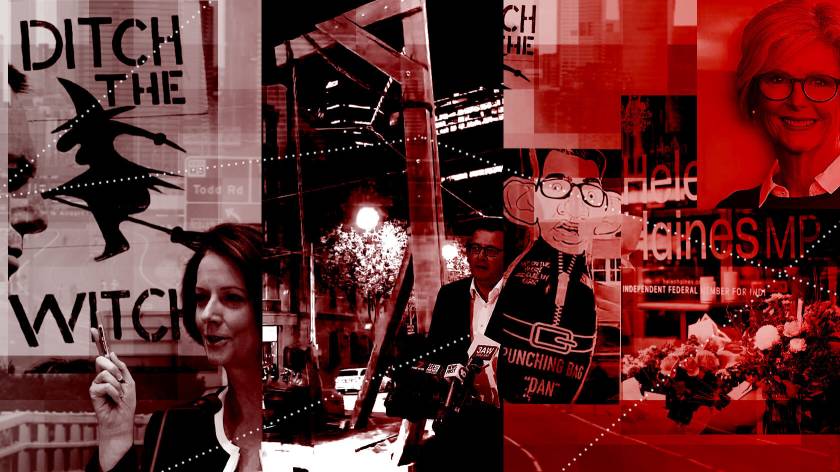
The targeted intimidation of independent MP Helen Haines has renewed urgent scrutiny over a deteriorating political culture that has spent more than a decade normalising vitriol against elected lawmakers.
While the immediate circumstances surrounding the confrontation involving the Member for Indi remain subject to security assessment, the hostility directed at Dr Haines represents far more than an isolated grievance. As an analysis published by Crikey reported, the episode arrives after years of steadily escalating rhetoric, charting a direct trajectory from inflammatory broadcast commentary to physical intimidation on the ground.
From Shock-Jock Slurs to Public Gallows
Australia's contemporary culture of political antagonism took decisive root over a decade ago. The venom that characterised the Gillard prime ministership—immortalised by broadcaster Alan Jones declaring the nation's first female leader should be put in a chaff bag and thrown into the sea, alongside protests bearing placards urging crowds to "ditch the witch"—marked a sharp departure from standard partisan combat.
That standard of discourse was further radicalised during the COVID-19 pandemic. In Melbourne, fringe protests over public health mandates culminated in demonstrators wheeling mock gallows through the streets while chanting for the execution of then-premier Daniel Andrews. Crikey observed that what began in talkback studios and roadside rallies has steadily metastasised into open threats of violence, fundamentally shifting the baseline of acceptable political expression.
Security Apparatus Strained by Expanding Hit Lists
The real-world consequences of this ideological drift have overwhelmed parliamentary security agencies. The Australian Federal Police (AFP) has recorded a dramatic, multi-year surge in threats against federal parliamentarians, prompting authorities to spend tens of millions of dollars bolstering constituency office defences.
Where backbench members once operated open-door civic offices in regional and suburban hubs, many are now forced to work behind reinforced glass, duress alarms, and permanent CCTV surveillance. Protective details, once preserved exclusively for the prime minister and foreign dignitaries, are now routinely deployed to shield federal representatives during basic community appearances.
Gendered Vitriol and the Crossbench Squeeze
Independent and crossbench women have frequently borne the sharpest brunt of the escalating hostility. Observers have long warned that female lawmakers attract a distinct, highly personalised brand of abuse that combines policy objections with deep-seated misogyny and threats of physical harm.
Dr Haines’ experience in the North East Victorian electorate of Indi underscores how community independents, whose mandates rely intrinsically on direct and unmediated grassroots engagement, are left particularly vulnerable when public discourse curdles into aggression.
A Threat to Democratic Access
Beyond the physical risk to individual politicians and their electorate staff, security analysts warn that the normalisation of violent rhetoric poses an existential threat to Australia's open democratic traditions. As access between citizens and their representatives narrows behind security checkpoints, the pool of future leaders willing to endure such exposure will inevitably contract.


