Fourteen children have tragically died after the roof of a private tuition centre in Lahore, Pakistan, caved in, leaving a community in mourning and prompting a swift police response. The devastating incident occurred in the Kahna suburb of the sprawling city, a densely populated area where many such informal educational establishments operate.
The tragedy has sent shockwaves across Pakistan, with many questioning the safety standards of unregulated buildings, particularly those catering to vulnerable young students. Rescue efforts were hampered by the precarious nature of the collapsed structure and the narrow access ways typical of the area, but emergency services worked tirelessly to recover the victims.
Dire Aftermath and Community Grief
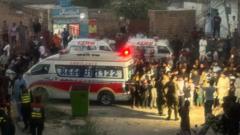
The scene in Kahna was one of chaos and profound sorrow as parents and relatives rushed to the site, desperate for news of their loved ones. Emergency responders, including the local police and rescue organisations, converged on the collapsed building, carefully sifting through debris in a grim search for survivors. The BBC World reported that 14 children have been confirmed dead, with several others sustaining injuries.
Eyewitnesses described a loud bang followed by a cloud of dust, as what was once a learning environment for young minds became a scene of unimaginable horror. Hospitals in Lahore were placed on high alert to receive the injured, though the majority of those retrieved from the rubble were succumbed to their injuries or were found deceased.
Two Arrests Made in Urgent Probe
Authorities have taken swift action in the wake of the disaster, arresting two individuals in connection with the incident. While their exact roles have not been disclosed, it is understood that they are being questioned regarding the construction and operational safety of the tuition centre. The Punjab government has launched a full-scale inquiry into the collapse, with a focus on determining culpability and preventing future tragedies.
Initial investigations are expected to scrutinise building permits, structural integrity, and adherence to safety regulations – or the lack thereof. Many private tuition centres in Pakistan operate outside stringent government oversight, often in residential buildings not originally designed for large gatherings, raising serious concerns about student safety.
Cracks in Unregulated Education Sector
The tragedy has cast a harsh spotlight on Pakistan's burgeoning, yet largely unregulated, private tuition sector. With public education often struggling with resources and quality, many Pakistani families, even those of modest means, invest in private tutoring to supplement their children's learning. These centres can range from informal arrangements in private homes to more structured, albeit still often unregistered, academies.
The incident in Lahore highlights the critical need for robust regulatory frameworks and rigorous enforcement of building codes, especially for premises where children congregate. Critics argue that lax oversight has created an environment where profit motives can overshadow safety concerns, putting countless young lives at risk. The financial cost of such negligence, while impossible to quantify in human terms, would likely run into many millions of Australian dollars if such an incident were to occur in Australia, covering emergency response, victim support, and potential legal claims.
Calls for Nationwide Safety Audits
In the wake of the collapse, there have been growing calls from civil society groups and educational advocates for nationwide safety audits of all educational institutions, both public and private. The goal is to identify and rectify hazardous structures before another preventable tragedy occurs. The emotional toll on the community of Kahna is immense, with families now grappling with unimaginable loss and the haunting question of how such a disaster could have been averted. The coming days will see continued investigations, as authorities work to piece together the exact sequence of events that led to the death of 14 innocent children.