
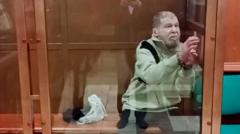
Russia has freed elderly American citizen Stephen Hubbard after more than two years in detention, transferring the 72-year-old to a St Petersburg airport following high-level diplomatic discussions with Washington.
BBC World reported Russian state media confirmations that President Vladimir Putin disclosed the move during face-to-face discussions with United States envoy Steve Witkoff. Mr Hubbard had been escorted directly to Pulkovo Airport in St Petersburg, signalling an abrupt end to his contentious imprisonment.
Sudden departure from St Petersburg runway
The transfer to Pulkovo, the primary international transport hub serving Russia's second city, indicates Mr Hubbard's repatriation was arranged rapidly under diplomatic escort. Russian state media indicated the decision was communicated directly by Mr Putin as discussions with Mr Witkoff progressed, though the exact terms underpinning the release remain undisclosed by authorities on both sides.
Neither Moscow nor Washington had formally published the full operational details of the transit at the time of publication, but the direct involvement of Mr Witkoff points to focused backchannel diplomacy initiated to resolve lingering consular disputes.
From Ukrainian home to Russian courtroom
Mr Hubbard, a retired English teacher originally from Michigan, had lived quietly in the north-eastern Ukrainian city of Izyum for several years before his capture by occupying Russian forces in early 2022. He remained largely out of public view until late last year, when he was brought before a Moscow court.
Russian prosecutors alleged the septuagenarian had entered into an agreement with a Ukrainian territorial defence unit, offering his services for roughly $1,000 a month (around AU$1,550) and bearing arms. In October, Russian authorities convicted him of acting as a mercenary, handing down a sentence of six years and 10 months in a high-security penal colony. Family members and independent observers persistently rejected the allegations, describing him as a frail retiree who had no military background or capability.
Delicate bargaining in shadow of Ukraine war
The sudden liberation of Mr Hubbard underscores how foreign nationals inside the Russian penal system continue to serve as pivotal diplomatic bargaining chips between the Kremlin and the West. While major multilateral prisoner swaps have previously secured the freedom of prominent journalists and former servicemen, individual releases brokered through specialist envoys reflect an evolving, transactional diplomatic posture.
The appearance of Mr Witkoff as the principal conduit in the discussions highlights how targeted emissaries are increasingly deployed to bypass formal, stalled diplomatic avenues, testing whether isolated concessions can unlock wider bilateral channels amidst the continuing warfare in Ukraine.
Canberra watches escalating hostage diplomacy
For Australian officials observing from Canberra, the case reinforces the severe hazards facing Western citizens inside the Russian Federation. The Department of Foreign Affairs and Trade continues to advise Australians against all travel to Russia, explicitly warning of the risks of arbitrary arrest, harassment, and politically motivated prosecutions without due legal process.
While Canberra maintains no direct role in the bilateral negotiations that secured Mr Hubbard's departure, Australian security analysts have frequently noted that Moscow’s readiness to detain and subsequently trade foreign nationals poses an ongoing security dilemma for all Western democracies.