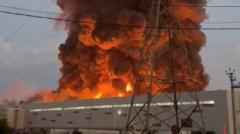
Multiple warehouses owned by Wildberries, Russia’s dominant online retailer, have been struck and set ablaze in what appear to be coordinated Ukrainian drone attacks overnight on Tuesday. The incidents, reported by BBC World, targeted key logistics hubs in the Krasnodar and Stavropol regions, marking a significant escalation in Ukraine's strategy of disrupting Russian infrastructure.
While the full extent of the damage remains under assessment, preliminary reports suggest substantial destruction to facilities crucial for Wildberries' vast distribution network. These attacks underscore Ukraine's continued efforts to degrade Russia's economic and logistical capabilities, extending the battlefield deep into Russian territory.
Targeting Russia's consumer lifeline
The choice of Wildberries as a target is particularly poignant. The platform, often dubbed the "Amazon of Russia," is a ubiquitous presence in Russian consumer life, offering everything from apparel to electronics. Disrupting its operations could have a tangible impact on the daily lives of millions of Russians, potentially fuelling public discontent and highlighting the war's increasing domestic cost.
Logistics centres, by their nature, are vital arteries for any large economy. The destruction or severe damage to these facilities can lead to supply chain bottlenecks, price hikes, and shortages of goods. For Wildberries, which relies on a highly efficient and integrated network to deliver across Russia’s vast expanse, these strikes represent a considerable operational challenge.
Escalating drone warfare
These latest incidents follow a pattern of increasingly sophisticated and deep-penetrating Ukrainian drone attacks on Russian soil. Initially focused on military targets and border regions, Ukraine's drone campaign has expanded to include oil refineries, industrial sites, and now, significant civilian-facing infrastructure. This shift indicates a deliberate strategy to inflict economic pain and sow disruption beyond the immediate front lines.
Military analysts suggest that such strikes aim to force Russia to divert air defence resources from the front to protect its rear, thereby creating potential vulnerabilities for Ukrainian forces. The use of drones, which are relatively inexpensive compared to traditional weaponry, also allows Ukraine to project power and exert pressure on Russia without direct engagement by manned aircraft or long-range missiles.
Broader economic implications
The targeting of Wildberries also sends a clear message about the war's economic dimensions. While Western sanctions have aimed to cripple Russia's economy, direct physical attacks on commercial infrastructure add another layer of pressure. Such incidents can deter investment, inflate insurance costs, and generally erode business confidence within Russia.
Should these attacks continue or intensify, the cumulative effect on Russia's consumer economy could be significant. For Australian businesses observing the geopolitical landscape, this escalation further highlights the volatile nature of supply chains and the unpredictable consequences of prolonged conflict. The long-term implications for Russia's domestic market, and its ability to maintain a semblance of normalcy under wartime conditions, remain a critical point of observation for international economists and policymakers alike.
Details surrounding the types of drones used and the specific targeting methods have not yet been fully disclosed by either side. However, the consistent success of these attacks suggests a growing capability within the Ukrainian military to strike strategic targets well within Russian territory, posing a persistent challenge to Moscow's assertion of control and security.