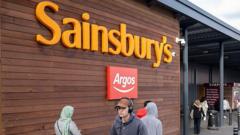
London: British retail behemoth Sainsbury's has struck a deal to offload its general merchandise brand, Argos, in a transaction estimated to be worth around A$230 million (£120 million). The move, first reported by BBC Business, marks a significant restructuring for the supermarket giant as it streamlines its operations amid a challenging economic climate.
The divestment will see Argos continue to maintain a strong presence within Sainsbury's stores, a strategic decision aimed at retaining customer convenience and leveraging existing retail footprints. This collaborative approach suggests a desire to extract ongoing value from the Argos brand while shedding the financial and operational responsibilities of full ownership.
A New Chapter for Argos Under Different Ownership
Under the terms of the agreement, Argos will continue to operate its popular in-store concessions within Sainsbury's supermarkets, a model that has seen substantial expansion since Sainsbury's acquired the brand in 2016. This integration initially aimed to provide a 'one-stop shop' for consumers, blending grocery with general merchandise offerings. Despite the change in ownership, this customer-centric approach is set to endure.
Furthermore, the deal stipulates that Argos will continue to stock Habitat products, a premium homewares brand also owned by Sainsbury's, and crucially, maintain its participation in the ubiquitous Nectar loyalty program. This ensures a seamless transition for consumers who have come to rely on these integrated services and rewards, mitigating potential disruption and maintaining brand loyalty. The ongoing involvement with Nectar points is particularly strategic, given the program's widespread adoption across the Sainsbury's ecosystem and its importance in customer retention.
Sainsbury's Strategic Refocusing
This divestment underscores a broader trend within the UK retail sector, where major players are re-evaluating their portfolios to focus on core competencies and improve profitability. For Sainsbury's, the sale of Argos allows the supermarket chain to concentrate more intensely on its primary grocery business, an area facing intense competition from discounters and online retailers.
Industry analysts suggest the move could free up capital and management resources, enabling Sainsbury's to invest further in its grocery proposition, enhance its digital capabilities, and potentially strengthen its online delivery services. The retail landscape has dramatically shifted in recent years, with a pronounced acceleration towards online shopping and a heightened demand for value, prompting companies like Sainsbury's to adapt swiftly or risk falling behind.
What This Means for Australian Consumers and Brands
While Argos itself does not have a direct retail presence in Australia, the implications of such a significant retail shake-up in a major international market like the UK resonate with Australian consumers and businesses. Global retail trends often find their way Down Under, and the strategic decisions made by multinational giants like Sainsbury's can offer insights into the future direction of the local market.
The emphasis on loyalty programs, the integration of diverse retail offerings within a single location, and the strategic divestment of non-core assets are all themes that Australian retailers are grappling with. The continued co-existence of Argos within Sainsbury's stores, despite different ownership, highlights the growing importance of partnerships and shared ecosystems even in a competitive environment. Australian brands might observe this model for potential collaborative ventures or strategic alliances designed to enhance customer experience and operational efficiency without necessarily resorting to full mergers or acquisitions.