
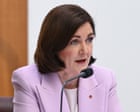
Liberal senator Sarah Henderson has conceded she wrongly claimed a late Palestinian journalist who contributed footage to the ABC held a Hamas identification card during a tense Senate estimates hearing in Canberra.
The admission followed an aggressive round of questioning this week, during which the shadow communications minister interrogated senior Australian Broadcasting Corporation executives over the public broadcaster’s editorial standards and its reliance on local freelancers in war-torn Gaza.
Heated Exchange in Senate Estimates
During the committee proceedings, Senator Henderson aggressively pressed ABC leadership over its Middle East coverage, focusing specifically on Roshdi Sarraj, a respected Palestinian videographer killed by an Israeli airstrike in October last year.
Sarraj had previously provided freelance video materials utilised by the ABC and numerous international outlets reporting on the humanitarian crisis in the Palestinian enclave. In her line of questioning, Senator Henderson asserted that Sarraj possessed an official Hamas identity card, raising doubts about the vetting procedures employed by the national broadcaster.
The public broadcaster's executives were asked whether freelance contributors operating on the ground in Gaza had links to proscribed terrorist organisations, prompting tense back-and-forth exchanges across the committee table.
Retraction Follows Sensational Headlines
The senator’s unsubstantiated assertions rapidly generated significant political fallout and amplified scrutiny of the national broadcaster. Guardian Australian politics reported that Senator Henderson subsequently reached out to clarify her position and admitted she made an error regarding the alleged Hamas documentation.
The retraction came after the unverified claim was seized upon by conservative media outlets. The confrontation led to a front-page report in The Australian, carrying the headline: “ABC investigates whether it hired Hamas terrorist for Middle-East coverage.”
Media analysts noted that the airing of unverified allegations under parliamentary privilege can quickly damage the reputations of independent journalists working under extreme conditions, as well as cast unjustified doubt on the integrity of the newsrooms that employ them.
Continued Political Pressure on Aunty
The clash reflects ongoing political tension between Coalition parliamentarians and the ABC over the network's reporting on the Middle East conflict. Federal Coalition figures have persistently accused the broadcaster of bias and urged executives to implement stricter oversight of third-party contributions from Palestinian territories.
ABC management has defended its editorial independence and robust verification mechanisms, explaining to parliamentarians that strict checks are undertaken before any footage or dispatch from freelance contributors is cleared for broadcast across its television, radio, and digital channels.
Perilous Conditions for Local Gaza Media
Sarraj, who co-founded the independent production company Ain Media, was widely regarded within the international press corps as a dedicated professional. Prior to his death, he filed dispatches for international agencies including Agence France-Presse and various global news operations alongside the ABC.
With foreign media largely barred by Israeli authorities from independent access to the Gaza Strip, international newsrooms have remained almost entirely reliant on local Palestinian camera operators, producers, and fixers.
Media safety watchdogs have repeatedly warned that Gaza has become the most dangerous conflict zone for media workers in modern history, with dozens of local reporters killed since hostilities erupted, underlining the perilous environment in which freelance correspondents must operate.