
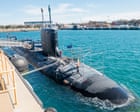
A former chief of the Australian Defence Force has called on the federal government to terminate the contentious Aukus agreement, warning that the public has been denied the strategic rationale behind it.
Writing in an analysis piece, as Guardian Australian politics reported, retired Admiral Chris Barrie argued that the nation must abandon the trilateral nuclear-powered submarine plan and instead pursue a properly tested strategy to replace the ageing Collins-class fleet.
Secrecy versus accountability
Admiral Barrie, who served as Australia's senior military officer between 1998 and 2002, noted that he spent much of his military career handling classified information. While acknowledging that sensitive operational plans, intelligence sources, and critical technical capabilities must remain strictly guarded, he argued that national security should not serve as a shield against public accountability.
According to Barrie, the Commonwealth has drawn an improper line between protecting genuine military secrets and withholding the fundamental logic of its strategic choices. He maintained that everyday Australians have been denied a coherent explanation regarding what the nuclear-powered submarines are genuinely intended to achieve.
Collins-class replacement in question
The intervention challenges the core tenets of the tripartite pact struck with the United States and the United Kingdom. Under the multi-decade plan, forecast to cost up to $368 billion, Australia intends to acquire at least three American Virginia-class submarines from the early 2030s before collaborating on a newly designed SSN-Aukus vessel in British and Australian shipyards.
However, concerns remain acute regarding the transition window as the Royal Australian Navy's six conventional Collins-class submarines reach the conclusion of their extended operational lifespans. Barrie asserted that rather than committing to an opaque and high-risk acquisition path, the Commonwealth should adopt a properly structured and rigorously tested procurement plan to sustain sovereign naval capability.
Escalating debate over strategic purpose
The critique from a former defence chief injects fresh momentum into a broader policy argument surrounding Australia’s maritime posture and sovereign independence. While successive federal governments have maintained that long-range, nuclear-powered boats are indispensable for deterring aggression across the Indo-Pacific, critics have increasingly challenged whether the operational requirements justify the enormous financial commitment and technological entanglement.
Commonwealth officials have repeatedly defended the Aukus framework as an essential enhancement of Australia's maritime reach and alliance interoperability. Yet Barrie’s public challenge underscores growing unease within the defence establishment that the government is unwilling or unable to answer fundamental questions about the fleet's ultimate role, leaving taxpayers to fund an enterprise whose strategic necessity remains unproven.