
Shoalhaven City Council has blocked a globally renowned installation commemorating Palestinian children killed in Gaza from its regional gallery, citing safety concerns and urging organisers to investigate hiring armed guards.
The decision has ignited fresh debate over civic censorship and the management of sensitive political discourse across regional New South Wales. The advocacy group Shoalhaven Friends of Palestine had sought to stage the Wall of Tears, created by American artist Phil Buehler, at the Shoalhaven Regional Gallery in Nowra.
Guardian NSW politics reported that the local authority refused permission on the grounds that the memorial posed an "unacceptable" hazard to municipal employees, commercial tenants and gallery visitors, pointing to the risk of volatile community conflict.
Security demands spark regional friction
According to the report, council administrators pressed organisers during planning discussions to examine extreme security measures, including the deployment of armed guards, before issuing a blanket refusal.
The suggestion that a regional cultural facility might require armed sentries represents an extraordinary escalation in standard local government risk-management protocols. Armed security is rarely mandated for arts programming in Australian public galleries, where standard security guards and regular police liaison are the conventional responses to contentious exhibits.
Organisers had intended to present the temporary installation on Tuesday as part of an ongoing nationwide tour. The rejection leaves the community group without a civic venue on the South Coast, prompting criticism from supporters that the local council capitulated to hypothetical threats rather than safeguarding public expression.
Global exhibition reaches political impasse
Buehler’s Wall of Tears features thousands of names and images documenting young casualties of the conflict in Gaza. It has previously been mounted in major public spaces both domestically and overseas.
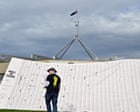
In September, the installation was erected on the front lawns of Parliament House in Canberra, where it drew significant public engagement and unfolded without major security disruptions. Organisers had anticipated that its presentation in Nowra would offer regional residents a similar opportunity for sombre reflection.
Instead, municipal officers deemed the emotive nature of the Middle East crisis too contentious for the gallery precinct, determining that the potential for confrontation outweighed the cultural merit of hosting the touring piece.
Local governments squeezed by geopolitical debate
The dispute in Nowra reflects a broader pattern across Australian local government, where suburban and regional councils have increasingly found themselves at the centre of international geopolitical friction.
Since the escalation of hostilities in late 2023, municipal chambers throughout New South Wales have grappled with contentious council motions, public protests, and disputes over flying flags or hosting cultural memorials.
While municipal bodies frequently cite workplace health and safety legislation and their duty of care to staff when curtailing polarising events, civil liberties advocates argue such caution sets a troubling precedent for artistic freedom and lawful assembly in publicly funded community spaces.