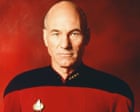
Sir Patrick Stewart, the acclaimed British stage and screen actor whose portrayal of Captain Jean-Luc Picard defined modern science fiction with moral gravity and compassionate authority, has died aged 86.
Guardian Australia Culture reported that the Yorkshire-born performer passed away peacefully following a short illness, prompting an international outpouring of grief from colleagues, industry leaders, and generations of devoted admirers. His passing marks the close of a remarkable seven-decade career that traversed classical theatre, blockbuster cinema, and groundbreaking television.
A commanding intellect on the bridge
When Stewart was cast as Jean-Luc Picard ahead of the 1987 debut of Star Trek: The Next Generation, television science fiction underwent a seismic shift. Prior to his arrival, the franchise was largely characterised by the dynamic tension between William Shatner’s swashbuckling, impulsive Captain Kirk and Leonard Nimoy’s unyielding logic as Spock.
Stewart established an entirely new archetype. Guardian Australia Culture observed that the Royal Shakespeare Company veteran brought elements of both predecessors to the Enterprise bridge, fusing razor-sharp analytical precision with a deeply felt humanism that his aristocratic formality could never completely mask. Across seven television seasons, four feature films, and the recent sequel series Star Trek: Picard, he made audiences believe that humanity’s distant future might genuinely be steered by philosophical contemplation, diplomacy, and moral resolve.
Classical pedigree meets Hollywood stardom
Born in Mirfield in the West Riding of Yorkshire in 1940, Stewart carved out an enviable stage career long before Hollywood took notice. He spent more than a decade as an associate artist with the Royal Shakespeare Company, earning critical acclaim in productions of The Winter’s Tale, Hamlet, and Antony and Cleopatra.
His stagecraft informed his cinematic choices when he relocated to the United States. In 2000, Stewart embraced another cultural touchstone as Professor Charles Xavier in the X-Men franchise. Across multiple instalments, he infused the wheelchair-bound mutant mentor with profound dignity, serving as the philosophical heartbeat of a multibillion-dollar comic-book cinema revolution.
An enduring symbol of utopian decency
Beyond the commercial accolades, Stewart’s enduring cultural power lay in his capacity to embody genuine decency without descending into sanctimony. The creators of Star Trek envisioned a twenty-fourth-century civilisation defined by progress, mutual respect, and intellectual curiosity; Stewart lent that utopian vision plausible weight, demonstrating that virtue could be as riveting on screen as villainy.
His performances resonated strongly with Australian audiences, who embraced not only his screen work but his visits to local stages, notably alongside his lifelong friend Sir Ian McKellen in a celebrated 2010 tour of Samuel Beckett’s Waiting for Godot.
Global tributes honour a screen titan
In the wake of his death, tributes have underscored the breadth of his influence. Former castmates and contemporaries, including William Shatner, joined arts organisations in remembering an artist who raised the standards of popular genre storytelling while mentoring younger generations of performers.
Stewart is survived by his wife, the musician Sunny Ozell, and two children from his first marriage. He leaves behind a screen and stage legacy that challenged audiences to imagine the very best of human potential.