
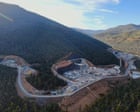
The cost of the Snowy 2.0 pumped hydro expansion has blown out to an eye-watering $25 billion, with the nation’s flagship renewable project delayed until at least 2029.
A major reassessment of the embattled infrastructure build in southern New South Wales has pushed the expected operational timeline back by another year, meaning commercial generation will not commence until the end of the decade. The revised figures represent a dramatic escalation from previous targets, intensifying scrutiny on the financial governance and technical execution of the country's most prominent clean-energy asset.
From a $2bn pledge to a $25bn headache
When first championed by the Turnbull Coalition government in 2017, Snowy Hydro 2.0 was presented as an affordable, nation-building undertaking with an estimated capital requirement of $2 billion. That figure has steadily unravelled over successive revisions, driven by compounding procurement expenses, volatile market conditions, and severe underground technical hurdles beneath Kosciuszko National Park.
As The Guardian Australia reported, fresh internal projections show the total capital outlay could reach as high as $25 billion—marking a twelvefold increase from its inception. The sheer scale of the blowout eclipses a major reset conducted only last year, when management and federal authorities revised the anticipated expenditure to approximately $13 billion and targeted a late-2028 finish.
Leadership at the Commonwealth-owned corporation has maintained that while the updated figures represent an immense financial adjustment, the outcome could have been far worse given the formidable geotechnical realities encountered within the mountain range.
Tunnelling milestones shadowed by complex geology
Despite the mounting cost, project benchmarks show physical construction is continuing to advance, with overall tunnelling progress now logged at roughly 65 per cent.
Excavation crews have spent years grappling with volatile ground conditions across the Snowy Mountains, where soft rock, subterranean caverns, and water inflows have repeatedly brought heavy machinery to an unscheduled halt. Complex geological faults have forced extended pauses for specialised tunnel boring machines, requiring extensive ground-stabilisation efforts that have added millions of dollars to contractor bills.
The project demands the excavation of roughly 27 kilometres of deep waterways linking the Tantangara and Talbingo reservoirs, creating an immense closed-loop pumped hydro system capable of circulating vast volumes of water to generate electricity during demand peaks.
Renewable timetable faces critical strain
The prolonged timeline delivers a substantial complication to Australia's broader energy transition, which leans heavily on Snowy 2.0 to provide long-duration storage as ageing coal-fired power stations steadily exit the National Electricity Market.
With commercial operations now deferred to the close of the decade, grid operators face tightening supply margins to secure baseline reliability. Energy market analysts warn that persistent delays to major dispatchable assets risk forcing extended operations at fossil-fuel facilities or necessitating expensive stopgap capacity, complicating federal emissions targets.
The federal government now faces renewed political pressure over the oversight of major public infrastructure builds, as consumers and industry confront the soaring cost of underwriting the transition.


