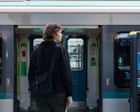
Commuters across Sydney’s south-west boarded driverless trains on Friday as passenger services officially commenced along the long-delayed Bankstown to Sydenham metro line, dramatically slashing travel times to the central business district.
The inaugural passenger service pulled out of Bankstown station at 4.31am, marking the end of a protracted period of construction and testing that had severely disrupted transport across the corridor for months. The conversion forms a critical final link in the Sydney Metro City and Southwest network, linking the outer south-western suburbs directly to Martin Place, Barangaroo, and across Sydney Harbour to Chatswood.
A dawn milestone for the south-west corridor
Enthusiastic public transport advocates and early-rising commuters boarded the first automated train before dawn, navigating newly fitted platform screen doors and modernised station concourses. The smooth launch followed years of political wrangling, union disputes, and extensive engineering upgrades required to adapt century-old rail infrastructure into a high-frequency automated transit system.
Travellers who endured months of replacement bus services were greeted by automated carriages departing every four minutes during peak periods. For residents in suburbs such as Campsie, Lakemba, and Punchbowl, the transition represents a generational shift in how the south-west connects to inner Sydney.
Transforming commute times from Bankstown to Sydenham
The speed of the automated network was immediately evident on its maiden morning. Early runs on the new line demonstrated that the journey from Bankstown through to Sydenham could be traversed in just over 20 minutes, offering a steep reduction compared to legacy Sydney Trains services.
Reporting on the opening day, The Guardian Australia observed that the journey into the city network took just 21 minutes in the early morning, demonstrating the efficiency gains achieved by removing drivers and modernising signalling. Where commuters previously faced timetabling bottlenecks and ageing rolling stock, the metro provides a turn-up-and-go model designed to accommodate growing urban density.
Cultural and culinary access unlocked along the T3 line
Beyond standard workplace commuting, transport officials and local business owners expect the line to foster reverse tourism into the multicultural heartlands of the south-west. The corridor is celebrated for its distinctive culinary precincts, ranging from Greek and Vietnamese grocers in Marrickville to the vibrant dining hub surrounding Bankstown station.
The Guardian Australia noted that the opening allowed suburban explorers to move effortlessly between precincts, with patrons taking early services into Bankstown to frequent renowned local institutions like An Restaurant before 9am. Local traders along the converted line have expressed optimism that easier transit links will draw visitors who previously viewed western suburban journeys as cumbersome.
Renewed property and lifestyle pressures
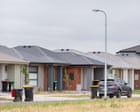
The arrival of turn-and-go rail has also intensified focus on urban planning and housing density along the south-western spine. Under state government transit-oriented development policies, stations along the converted alignment are slated for significant residential uplifts, bringing mid-rise and high-rise apartments to surrounding streets.
While rapid transit has made suburbs along the alignment increasingly attractive to prospective buyers seeking sub-half-hour commutes into the CBD, local councils have raised concerns regarding infrastructure capacity and gentrification. For the thousands of passengers boarding on day one, however, the immediate relief of reliable, rapid transit was the primary triumph after years of waiting.