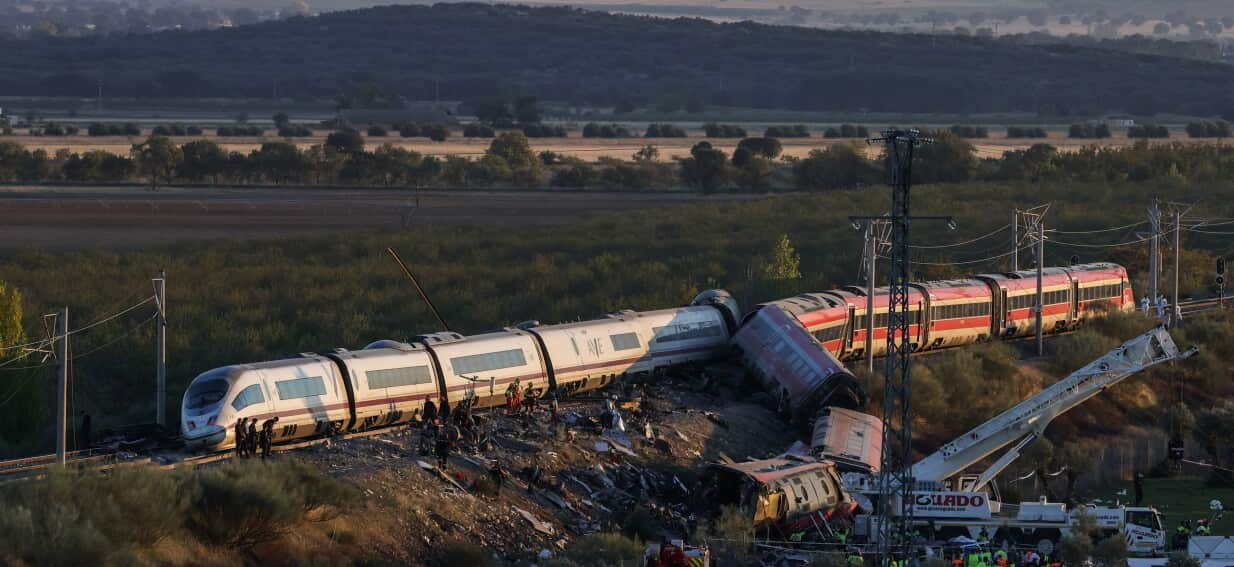
Spain has plunged into nationwide mourning after a catastrophic high-speed passenger train derailment killed at least 68 people, triggering urgent questions surrounding safety protocols across the European nation’s prized railway network.
The tragedy unfolded as the service, carrying hundreds of passengers on an intercity route, left the tracks at velocity, crushing carriages and scattering wreckage across the rail corridor. Emergency responders worked through the night under floodlights to extricate survivors trapped within twisted steel, while regional hospitals enacted mass-casualty protocols to treat dozens of critically injured commuters.
Catastrophic impact on busy transit corridor
Local emergency authorities confirmed that search-and-rescue teams faced perilous conditions amidst the mangled carriages, with heavy machinery deployed to hoist overturned sections and secure unstable debris.
SBS News Top Stories reported that at least 68 people perished in the incident, with officials cautioning that the death toll could climb further as recovery specialists gain access to the most severely damaged carriages.
Family members gathered at temporary crisis centres established near the crash site, awaiting news of missing loved ones as forensic teams commenced the sombre task of formal identification. Grief counselling services were mobilised across multiple municipalities linked by the transit route.
Rising anger over repeat systemic failures
The disaster has ignited fierce debate over the structural integrity and operational oversight of Spain's railway network. Crucially, SBS News Top Stories reported that this catastrophe represents the country's second major rail disaster this year, compounding public shock and escalating political pressure on Madrid.
Spain has spent decades developing Europe's most expansive high-speed rail system, long celebrated as a benchmark of modern engineering and regional connectivity. However, the occurrence of two lethal accidents within a matter of months has rattled passenger confidence, prompting rail worker organisations and passenger advocacy groups to question whether rapid network expansion has compromised preventative maintenance routines and technical safeguards.
Pressure mounts on Madrid over infrastructure oversight
Independent rail safety analysts point to potential vulnerabilities in automated braking mechanisms, track maintenance cycles, and crew operational fatigue. While investigators caution that it remains premature to establish whether mechanical failure, infrastructure defects, or human error precipitated the derailment, calls for sweeping reforms have already begun echoing through the Spanish parliament.
Opposition lawmakers and transport specialists have demanded a fully independent judicial inquiry rather than relying purely on internal departmental assessments. Transport authorities have pledged unreserved transparency, announcing immediate audits across parallel high-speed lines to reassure an anxious travelling public.
With flags flying at half-mast across the country and three days of official mourning declared, the Spanish government now faces a formidable test: determining how a flagship public asset succumbed to deadly catastrophe twice in a single calendar year.