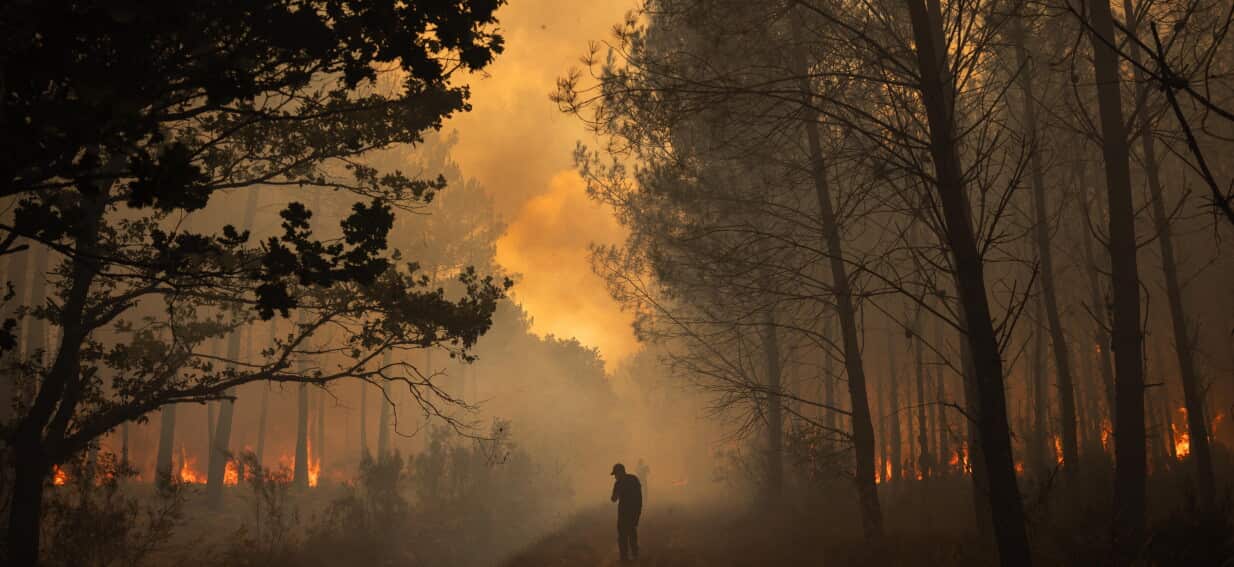
Thousands of Spanish residents, forced from their homes by a wave of devastating bushfires, have begun the cautious journey back as the immediate threat subsides across 13 affected regions. However, authorities caution that the danger is far from over, with tinderbox conditions now shifting focus to France, which is bracing for a potential inferno.
The widespread fires, fuelled by a scorching heatwave gripping sections of Europe, wreaked havoc across vast swathes of Spain. Families evacuated from towns and villages watched anxiously as emergency services battled the relentlessly spreading flames, some losing everything to the destructive force. The all-clear to return, issued by Spanish officials, brings a sense of relief but is tempered by the stark reality of the devastation left behind and the ever-present risk of reignition.
Shifting Sands of Danger
While Spain breathes a collective sigh of relief, the oppressive heatwave has migrated, placing France squarely in the crosshairs. Forecasters are predicting record-breaking temperatures across the southern half of the Hexagon, creating what experts describe as 'tinderbox conditions'. This follows a drier-than-average winter and spring, leaving vast areas of brush and forest exceptionally vulnerable to ignition. French emergency services are on high alert, with additional firefighting resources, including water-bombing aircraft, being strategically deployed to areas deemed at highest risk.
The prospect of widespread blazes in France casts a long shadow, particularly given the memory of severe wildfires that have plagued the country in recent years. The economic impact could be substantial, affecting agriculture, tourism, and infrastructure. Local authorities are urging residents and visitors alike to exercise extreme caution, with bans on open fires and restrictions on forest access expected to be implemented in critical zones.
Unprecedented European Heatwave
This current spate of wildfires in Spain and the heightened risk in France are intrinsically linked to an unprecedented and prolonged heatwave sweeping across much of Southern Europe. Temperatures have consistently soared above 40 degrees Celsius in many areas, creating a volatile environment where even a single spark can lead to catastrophe. Scientists are increasingly drawing parallels between such extreme weather events and the escalating impacts of climate change, suggesting that these intense fire seasons could become the new norm.
The financial cost of combating these large-scale bushfires is staggering. Early estimates suggest that the Spanish government and affected communities will face a bill running into hundreds of millions of Euros for firefighting efforts, property damage, and long-term environmental rehabilitation. European Union mechanisms are likely to be activated to provide financial assistance to member states grappling with such extensive natural disasters, underscoring the collective challenge faced by the continent.
Aussie Lessons for European Firefighters
For Australian readers, the images and reports emanating from Europe evoke a familiar and sombre understanding of the power of bushfires. Our own nation’s experiences with devastating Black Summer blazes offer a stark reminder of the long-term recovery process and the psychological toll on affected communities. SBS News Top Stories reported on the initial evacuations, highlighting the swift action taken by Spanish authorities to protect human life, a strategy well-practised by Australian fire agencies.
The challenges faced by European firefighters in these conditions – navigating dense forests, often in mountainous terrain, under extreme heat – mirror many of the operational realities Down Under. There is an ongoing exchange of knowledge and expertise between fire services globally, with Australian specialists often sharing insights into large-scale fire suppression, community preparedness, and post-fire recovery strategies that could prove invaluable as European nations increasingly confront these formidable threats.