
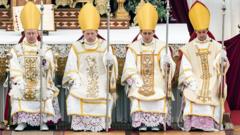
A defiant ceremony in a picturesque but isolated corner of the Swiss Alps has seen two new bishops consecrated within the traditionalist Society of Saint Pius X (SSPX), directly flouting directives from the Vatican and reigniting fears of a formal schism within the Catholic Church.
The ordinations, attended by thousands of faithful from across the globe, including a significant contingent of Australian traditional Catholics, took place at the SSPX's seminary in Écône. The BBC World service reported on the contentious event, highlighting the ongoing ecclesiastical tension.
The consecrations were performed by Bishop Bernard Fellay, the Superior General of the SSPX, and Bishop Alfonso de Galarreta. Both men are themselves among the four bishops illicitly consecrated by Archbishop Marcel Lefebvre in 1988, an act that led to their excommunication and a profound split with Rome.
Echoes of an Historic Divide
The SSPX, an organisation founded by Archbishop Lefebvre in 1970, rejects many of the reforms introduced by the Second Vatican Council (1962-1965), particularly the changes to the liturgy and the Church's ecumenical outreach. They advocate for a return to pre-Vatican II traditions and doctrine, viewing the modern Church as having strayed from its true path.
For years, the Vatican has attempted to reconcile with the SSPX, offering various olive branches, including lifting the excommunications of the four bishops in 2009. However, these efforts have consistently faltered over doctrinal disagreements, primarily regarding the authority of the Second Vatican Council.
The current Pope, Francis, has issued a series of increasingly firm warnings against such unauthorised ordinations, explicitly stating that they represent a grave act of disobedience and risk a full-blown schism. Vatican officials have reiterated that these ordinations are illicit and bestow no canonical jurisdiction upon the individuals, effectively rendering them bishops in name only, without legal standing within the broader Catholic structure.
Australian Adherents in Attendance
While the main event unfolded in Switzerland, the controversy resonates strongly within Australia, where the SSPX maintains a discernible presence. Australian traditional Catholics, many of whom travelled to Écône for the ceremony, expressed their solidarity with the SSPX's stand for tradition.
A Sydney-based spokesperson for a traditionalist group, who wished to remain anonymous, stated that the ordinations were a necessary step to ensure the continuity of authentic Catholic faith and worship. They lamented what they perceive as a liberal drift within the mainstream Church, which they believe is alienating many faithful worshippers.
Estimates suggest that hundreds of Australian dollars were spent by individuals travelling to the remote Swiss location, underscoring the deep commitment of some to the traditionalist cause. These acts of defiance present a particular challenge to Australian dioceses, which must navigate pastoral care for parishioners who may feel drawn to both the mainstream Church and the traditionalist movement.
Vatican's Path Forward
The Vatican now faces a critical juncture. The Pope's warnings have been openly disregarded, underscoring the SSPX's continued independence and their unwavering commitment to their unique interpretation of Catholic tradition. Observers suggest that the Holy See may respond with further canonical sanctions, potentially including new excommunications, although this remains to be seen.
Such a move, while affirming the Vatican's authority, could further entrench the SSPX and formalise the schism that the Pope has sought to avoid. Conversely, a continued policy of rapprochement, despite repeated setbacks, might be perceived as weakness or an endorsement of their defiance.
The deeply rooted ideological divide between the SSPX and mainstream Catholicism appears to be widening, with the latest ordinations serving as a stark reminder of the enduring challenges to unity within the faith.