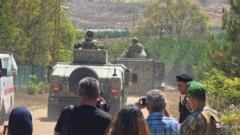
The United States military has escalated its campaign against Iran, releasing footage of a tenth consecutive night of strikes, fanning fears of broader conflict across the already volatile Middle East. The relentless aerial bombardment, conducted by US Central Command (CENTCOM), signals a significant increase in the operational tempo against targets within Iran, raising alarms among international observers and Canberra alike.
Al Jazeera reported that CENTCOM publicly disseminated video evidence of the latest assault, showcasing precision strikes against what Washington describes as facilities and infrastructure linked to Iranian-backed groups. This sustained military pressure comes amidst a broader backdrop of escalating regional tensions, with various proxy conflicts simmering dangerously close to boiling over.
Unprecedented Reprisals and Escalation
The current wave of strikes represents an unprecedented level of direct engagement by the US military against Iranian interests, moving beyond previous, more circumspect retaliatory actions. While specific targets remain largely undisclosed for operational security, analysts suggest the focus is likely on command and control centres, weapons depots, and training facilities used by groups Washington deems destabilising. The consistent nature of these nocturnal operations indicates a deliberate strategy to degrade Iran's capabilities and deter further aggression, a strategy that carries inherent risks of miscalculation and unintended escalation. Australian foreign policy experts are closely monitoring the situation, acutely aware of the potential economic and geopolitical fallout, particularly concerning oil prices which could impact Australian consumers at the petrol pump.
Regional Instability on a Knife-Edge
The tit-for-tat exchanges between the US and Iran, often conducted through proxies, have dramatically intensified in recent months. This latest surge in direct military action threatens to push an already precarious regional security environment to its breaking point. Neighbouring states, many of whom have complex relationships with both Washington and Tehran, are bracing for potential spillover effects. The ongoing conflict in Gaza and the Houthi attacks on shipping in the Red Sea have already created a volatile mosaic of interconnected crises, and these US strikes add another layer of complexity. The Port of Darwin, for example, is a hub for Australian energy exports to Asian markets, and any disruption to global trade routes would have a material impact.
Canberra’s Concerns and Diplomatic Front
The Australian government has repeatedly expressed its deep concern over the escalating tensions in the Middle East, urging all parties to exercise restraint and pursue diplomatic solutions. While Australia remains a steadfast ally of the United States, there is a clear understanding in Canberra that a full-blown regional conflict would have profound global ramifications, including significant economic disruptions and humanitarian crises. Efforts are likely underway through diplomatic channels to de-escalate the situation, though the public stance remains primarily one of watchful waiting and advocating for a peaceful resolution. The direct engagement evident in these strikes underscores the challenge facing international peacemakers aiming to restore stability.
Geopolitical Chessboard and Future Prospects
The sustained nature of these US strikes suggests a long-term strategy rather than a singular punitive action. Washington appears determined to re-establish deterrence in the face of what it perceives as unchecked Iranian aggression, particularly through its proxies. However, the risk remains that each strike could be interpreted by Tehran as a justification for further retaliation, trapping both sides in a dangerous cycle. The geopolitical chessboard of the Middle East is now more complex than ever, with alliances shifting and objectives often clashing. The prospect of achieving lasting stability seems increasingly distant as the region grapples with the fallout from this intensified military campaign. For the average Australian household, the implications could range from higher fuel costs to broader economic uncertainty, underscoring the interconnectedness of global affairs.