
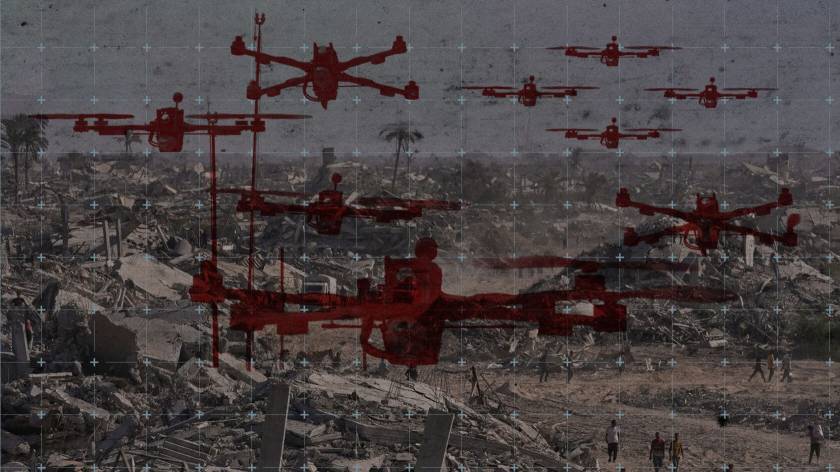
The rapid integration of artificial intelligence into modern warfare is creating an unprecedented legal quandary: who is responsible when an AI-driven weapon system causes a human death?
This pressing question, highlighted by investigative outlet Crikey, reveals a profound disconnect between the accelerating pace of technological advancement and the traditionally slower evolution of criminal law. As nations, including Australia, invest heavily in defence technologies featuring AI capabilities, the need to define accountability for non-human actors in combat scenarios has become a critical, yet largely unanswered, challenge.
Australia's Looming Legal Labyrinth
Australia's defence strategy increasingly incorporates AI, from surveillance drones to advanced missile systems. However, the legal framework for assigning blame in the event of an AI-orchestrated fatality remains alarmingly undeveloped. Unlike human soldiers who operate under established rules of engagement and are subject to courts-martial or international law, autonomous systems introduce a complex layer of technological and ethical ambiguity.
The traditional tenets of criminal law – intent, negligence, and direct causation – struggle to apply neatly when the decision to engage, or even the execution of that decision, is largely a function of algorithms. Crikey's analysis underscores that the concept of a non-human actor committing a crime is an uncomfortable fit for existing legal precedents, which are rooted in human agency and culpability.
The Chain of Command Conundrum
When an AI system malfunctions, misidentifies a target, or makes a decision resulting in civilian casualties, the question of who is ultimately responsible becomes a labyrinthine exercise. Is it the programmer who coded the algorithm? The commander who deployed the system? The manufacturer who built it? Or the political leader who authorised its use?
The complexity is compounded by the 'black box' nature of some advanced AI, where even its creators may not fully understand why it makes certain decisions. This lack of transparency challenges the very notion of foreseeability and intent, cornerstones of criminal accountability. Experts suggest that without clear lines of responsibility, there's a risk of a 'responsibility vacuum,' where no one is truly held accountable, eroding public trust and potentially encouraging less cautious deployment of such technologies.
International Law Playing Catch-Up
Globally, the discussion around Lethal Autonomous Weapons Systems (LAWS) is intensifying within bodies like the United Nations, but progress on legally binding frameworks is slow. While nations debate definitions and potential moratoriums, the technology continues to advance. Australia, as a signatory to various international humanitarian laws, must navigate this emerging landscape carefully. The principles of distinction, proportionality, and precaution, which govern armed conflict, are difficult to uphold when the 'decision-maker' is an algorithm.
Legal scholars argue that the development of new international protocols, or at least clear national legislation, is imperative. This could involve imposing strict liability on developers or commanders, or establishing specific legal categories for AI-related incidents. The stakes are immense: ensuring adherence to ethical principles, preventing an arms race in killer robots, and safeguarding human dignity on an increasingly automated battlefield.
Urgent Call for Australian Action
The Crikey report serves as a stark reminder that Australia cannot afford to lag behind in addressing this critical legal and ethical frontier. As Australian defence forces look to integrate more sophisticated AI, there is an urgent need for government, legal experts, defence strategists, and ethicists to collaborate on robust legal frameworks.
Without clear definitions of responsibility and accountability, the deployment of autonomous weapon systems risks undermining international humanitarian law, fostering impunity for grave errors, and ultimately diminishing the moral compass of warfare. The time to define who is to blame when AI takes a life is now, before the next generation of conflicts are fought by machines that outpace our capacity for justice.


