
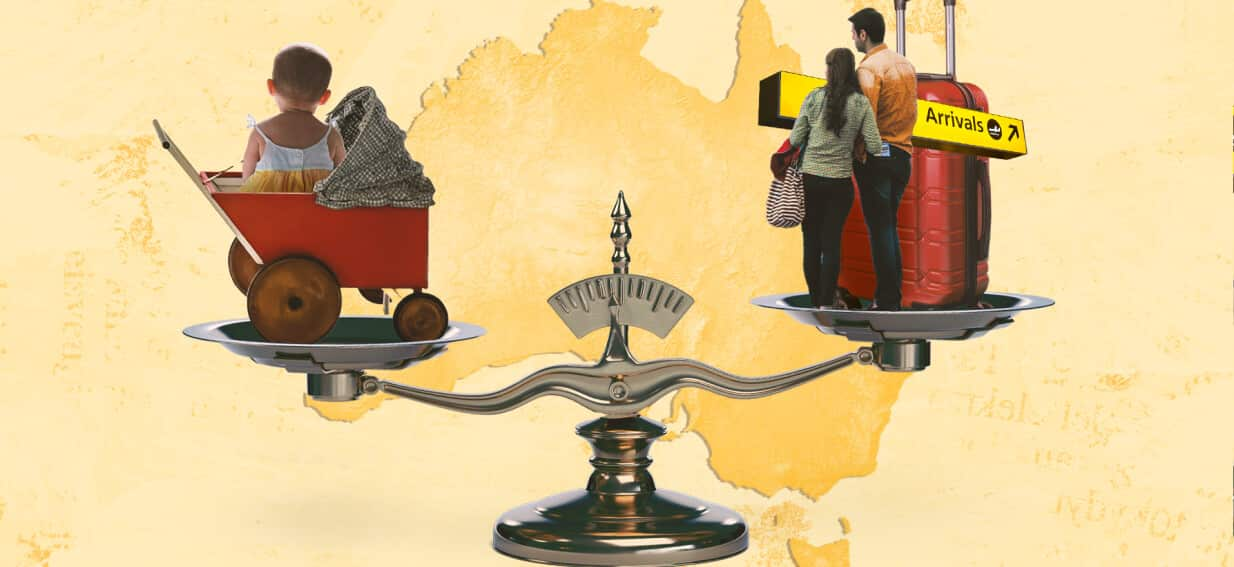
Australia is confronting a deepening demographic crunch as fertility rates plummet to historic lows, threatening long-term economic prosperity and placing unprecedented fiscal strain on future generations, SBS News Top Stories reported.
The nation’s total fertility rate has trended downwards for decades, slipping far below the replacement benchmark of 2.1 births per woman. While the phenomenon mirrors patterns seen across the OECD, the speed of the decline has raised alarms among demographers and treasury officials alike, who warn that a smaller workforce will inevitably struggle to fund the ballooning health, pension, and aged-care entitlements of an ageing populace.
A Steady Descent Below Replacement Level
Decisions to delay or forgo parenthood are increasingly driven by financial realities rather than shifting cultural preferences alone. Prospective parents face a convergence of economic hurdles, dominated by runaway housing prices, high rental costs, and stubborn general inflation.
Compounding these pressures is the high cost of early childhood education and the career penalties often borne by primary carers, predominantly women. Even with recent Commonwealth expansions to paid parental leave and childcare subsidies, many young Australians view family formation as an unaffordable luxury, prompting couples to postpone having children until later in life, which naturally compresses average family sizes.
Mounting Pressures on the Public Purse
The broader macroeconomic consequences of this birth dearth are profound. As SBS News Top Stories highlighted, a shrinking domestic birth rate is not merely a private household matter, but a national structural crisis.
In the coming decades, Australia's old-age dependency ratio will shift dramatically. With fewer income-tax-paying workers supporting a larger cohort of retirees, the Commonwealth budget faces an intensifying squeeze. Vital social programmes, from the National Disability Insurance Scheme to Medicare and the Age Pension, rely heavily on individual income tax receipts—revenue streams that diminish when the relative size of the working-age population contracts.
The Limits of an Immigration Fix
Historically, successive federal governments have turned to permanent and temporary migration programmes to offset natural population deficits. Overseas arrivals tend to be younger and immediately tax-productive, offering an immediate demographic and fiscal injection.
However, reliance on migration presents clear limitations. Migrants inevitably age themselves, creating an ongoing requirement for high population intakes simply to maintain current workforce ratios. Furthermore, rapid population growth through migration without commensurate investment in housing, public transport, and urban infrastructure risks exacerbating the very living cost pressures currently dissuading domestic family growth, turning the policy into a complex balancing act.
Redesigning Policy for Modern Families
Economists argue that addressing the shortfall demands more than short-term migration levers; it requires systemic reform to support working families. Broader housing market intervention, structural tax changes, and genuine workplace flexibility are increasingly seen as essential components of any enduring solution.
Unless the underlying economic barriers to parenthood are dismantled, Australia risks locking in an irreversible demographic trajectory that leaves future generations with fewer resources, heavier fiscal burdens, and a stagnant economy.


