
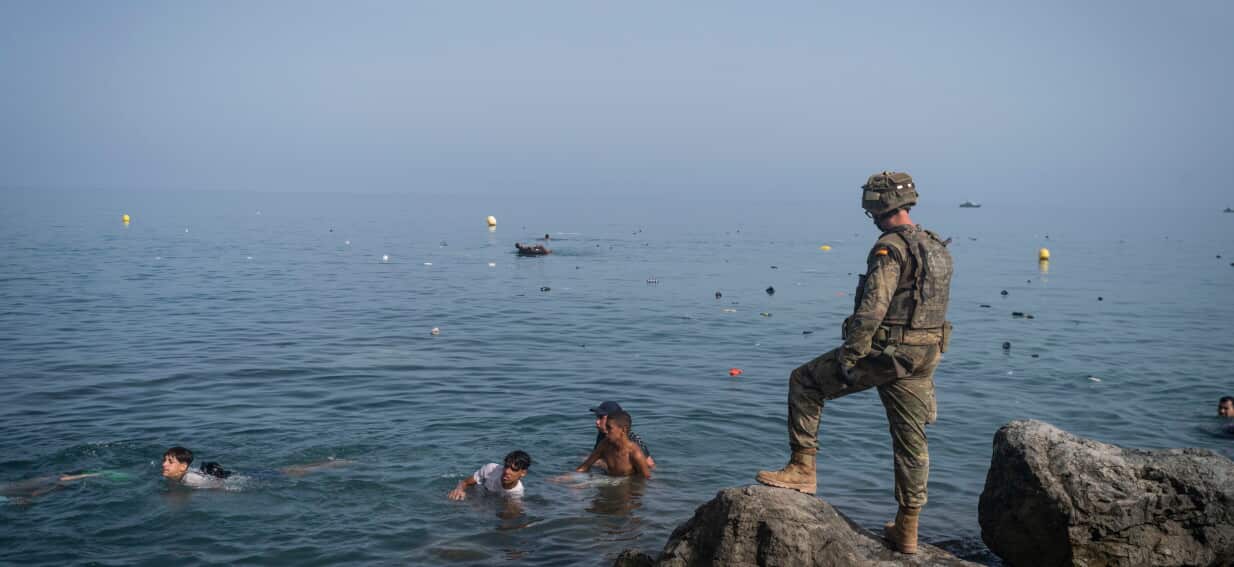
Ceuta, a city of just 85,000 residents, found itself at the epicentre of a staggering humanitarian and diplomatic crisis when, within a mere 24 hours, its population swelled by nearly a fifth, or potentially even more, as thousands of migrants poured across its border from Morocco. This sudden, overwhelming influx, described by SBS News Top Stories as equivalent to nearly two-thirds of the city’s population arriving overnight, sent shockwaves through Spain and Europe.
The unprecedented surge saw men, women, and children, many swimming around the breakwaters separating Morocco from Spanish territory, arrive on Ceuta’s beaches. Others clambered over the formidable border fences, highlighting the desperate measures individuals are willing to take in pursuit of a better life. The incident quickly escalated beyond a localised event, drawing international condemnation and illuminating the fragile dynamics of migration policies on Europe's southern frontier.
A Border Blurs Under Duress
The scenes unfolding in Ceuta were chaotic and heartbreaking. Footage shared globally depicted families, some with young children, navigating treacherous waters, often using inflatable rings or makeshift flotation devices. Spanish authorities, initially overwhelmed, mobilised military personnel to assist border guards. The sheer volume of arrivals strained local resources, with emergency services struggling to provide basic necessities like food, water, and medical care to the thousands now sheltering on the city's shores and in temporary facilities.
The vast majority of those who arrived were Moroccan nationals, including many unaccompanied minors. This demographic detail quickly shifted the narrative from a general migration crisis to a specific diplomatic confrontation between Spain and Morocco. While many adults were swiftly repatriated, the plight of the children, protected under international law, presented a significant challenge for Spanish authorities, who were obliged to house and care for them.
Geopolitical Chessboard in North Africa
Analysts were quick to point out that the sudden opening of the Moroccan border was no accident. The mass arrival followed escalating tensions between Madrid and Rabat over Spain's decision to offer medical treatment to Brahim Ghali, the leader of the Polisario Front, a Western Sahara independence movement. Morocco views the Polisario Front as a terrorist organisation and considers Western Sahara its own territory. Spain's move was perceived as a significant affront by Rabat.
This deliberate relaxation of border controls by Morocco was widely interpreted as a retaliatory measure, a form of diplomatic pressure exerted through human lives. European Union officials, including European Council President Charles Michel, condemned the incident, expressing solidarity with Spain and emphasising that "the EU will not be intimidated." The episode underscored how migration routes can be weaponised in geopolitical disputes, turning individuals seeking refuge or economic opportunity into pawns in a larger political game.
The Lingering Aftermath and Future Imperatives
In the immediate aftermath, Spanish authorities managed to return many of the new arrivals to Morocco, a process that drew criticism from human rights groups over the speed and legality of some repatriations. However, the long-term implications for Ceuta and Spain remain substantial. The event served as a stark reminder of the vulnerability of European borders and the complex interplay of humanitarian concerns, national sovereignty, and international relations.
The incident has reignited debates across Europe about collective responsibility for border management, migration policies, and foreign aid to North African nations. While the immediate crisis subsided, the memory of Ceuta's beaches swamped by thousands of desperate individuals will undoubtedly influence future policy discussions in Brussels and Madrid. The costs, both human and financial, are profound, with ongoing investment needed to manage such movements, alongside a commitment to addressing the root causes of migration. For Australia, which often observes European migration challenges with a degree of detachment, Ceuta’s crisis offers a potent reminder of the complexities inherent in global migration flows, even if the geopolitical specifics are distinctly European.