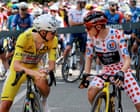
Paris, France – The thrilling battle for the yellow jersey at this year's Tour de France took an unexpected turn with revelations that the frontrunners, Tadej Pogačar and Jonas Vingegaard, were roused from their sleep for covert doping tests.
The International Testing Agency (ITA) successfully petitioned a Paris judge to authorise the highly unusual night-time drug screens, conducted in the early hours of Sunday morning, July 19. This unprecedented measure saw both cycling titans tested outside the standard 6 am to 11 pm window typically observed for anti-doping controls.
Judicial Consent for Midnight Checks
Confirmation of the extraordinary measures came directly from the Paris prosecutor's office on Monday. They stated that the ITA had approached a “Paris judge specialising in liberty and detention matters” to secure the necessary authorisation for the out-of-hours testing. This judicial green light underscores the gravity with which anti-doping bodies are pursuing integrity within elite sport, particularly in marquee events like the Tour de France.
While the specific reasons for targeting Pogačar and Vingegaard for night-time tests have not been publicly disclosed, the move suggests a proactive and assertive stance by the ITA. Both cyclists were in a fierce contest for the lead at the time, with their performances drawing widespread attention and speculation, as is often the case in high-stakes sporting competitions. The judicial oversight ensures that such intrusive measures are not taken lightly and respect the fundamental rights of athletes, even in the pursuit of a drug-free sport.
Intensified Scrutiny for Cycling's Elite
Guardian Australia Sport reported on the initial summary of the events, highlighting the rare nature of these nocturnal checks. The decision to involve a judge for authorisation speaks volumes about the increased scrutiny faced by top-tier athletes in a sport historically plagued by doping scandals. Cycling, perhaps more than any other, has strived to rebuild its reputation, leading to rigorous and often unexpected testing protocols.
Athletes are accustomed to providing their whereabouts to anti-doping agencies, allowing for unannounced tests within designated windows. However, extending these controls into pre-dawn hours, and requiring judicial intervention to do so, represents a significant escalation. It ensures that no stone is left unturned in verifying the legitimacy of performances, particularly when extraordinary feats are witnessed on the world stage.
The Lingering Spectre of Doping
The shadow of doping continues to loom over professional cycling, making every exceptional performance subject to intense examination. While the vast majority of athletes compete clean, the sport's history has necessitated a hyper-vigilant approach from anti-doping authorities. These night-time tests, even if they yield no adverse findings, serve as a potent reminder to all competitors that testing can occur at any time, leaving no leeway for those who might consider illicit enhancements.
For fans, the integrity of the sport is paramount. News of these robust testing measures, while initially surprising, ultimately reinforces the commitment to fair play. It ensures that the incredible athleticism and endurance displayed by riders like Pogačar and Vingegaard – who are pushing the boundaries of human performance – are thoroughly scrutinised, offering greater assurance that their achievements are truly their own. The cost of such vigilance, while potentially disruptive for the athletes, is deemed a necessary investment in maintaining credibility and public trust in the pinnacle of cycling.