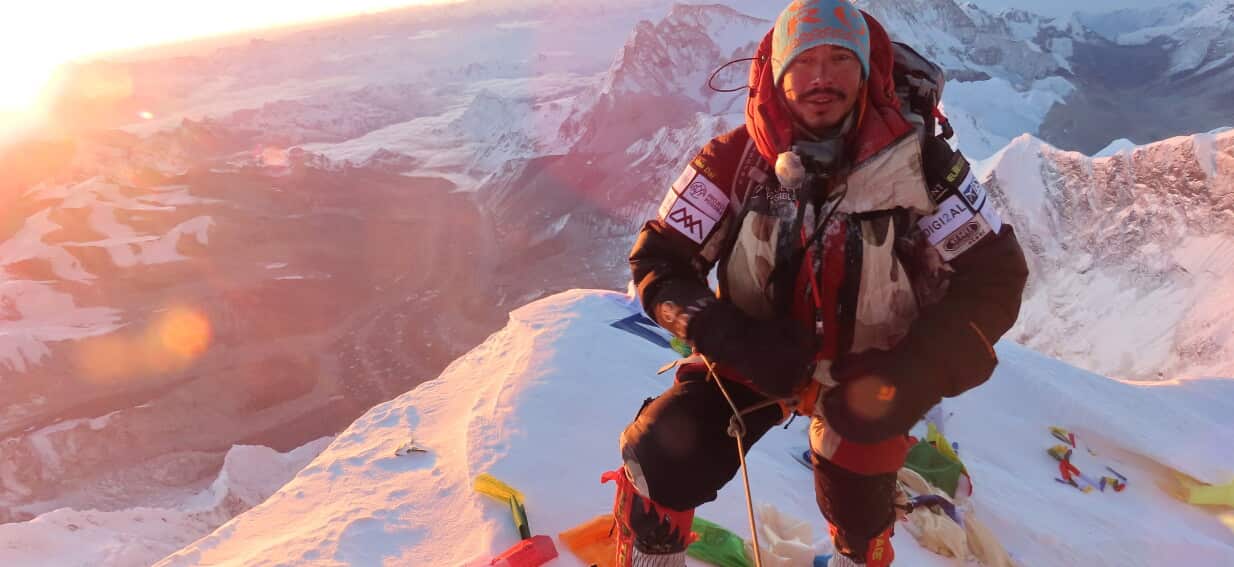
The mountaineering world is in mourning following the confirmation that Nirmal Purja, the intrepid Nepali climber who redefined high-altitude endurance, has perished alongside nine others in a devastating avalanche on Pakistan's treacherous Broad Peak. The tragedy, which unfolded on the 8,051-metre massif, has sent shockwaves through the global climbing community, leaving an unfillable void.
Purja, 40, gained international acclaim for his audacious 'Project Possible' in 2019, where he summited all 14 of the world's 8,000-metre peaks in a record-breaking six months and six days. His death marks a profound loss for a sport already fraught with peril, extinguishing a flame that burned brightly with ambition and an unyielding spirit.
Broad Peak's Deadly Embrace
The catastrophic incident occurred as Purja and his team, reportedly part of a larger expedition, were ascending the challenging slopes of Broad Peak, the 12th highest mountain in the world. Details remain scant, but initial reports suggest the avalanche struck at a high altitude, sweeping the climbers away with immense force. SBS News Top Stories reported that the exact circumstances leading to the snowslide are still under investigation, but unstable snow conditions at this time of year are a known hazard.
Broad Peak, part of the Karakoram range, is notorious for its technical difficulties and unpredictable weather, claiming numerous lives over the decades. This season has been particularly challenging, with several expeditions reporting precarious conditions. The latest fatalities underscore the inherent dangers even for the most experienced mountaineers tackling these colossal peaks.
Heroic Legacy and Unfinished Dreams
Nirmal Purja's legacy extends far beyond his speed records. A former Gurkha and Special Boat Service (SBS) operative, he brought a disciplined, military-honed approach to mountaineering, often pioneering new techniques and demonstrating extraordinary leadership. His expeditions were not merely about conquering summits but also about pushing the boundaries of human endurance and inspiring a new generation of climbers. He was a vocal advocate for environmental protection in the Himalayas and a mentor to many aspiring Sherpa climbers.
Known affectionately as 'Nimsdai', Purja's incredible strength and unwavering optimism were infectious. He often spoke of the mental fortitude required to survive at extreme altitudes, a testament to his profound connection with the mountains. Friends and colleagues have expressed profound sorrow, reflecting on a man who seemed almost invincible, whose passion for the peaks was matched only by his deep respect for their formidable power.
Perilous Recovery Operation Underway
Rescuers are currently grappling with the immense challenge of recovering the bodies of Purja and the nine other victims. The extreme altitude, coupled with the instability of the terrain and the sheer volume of snow and ice from the avalanche, is making operations incredibly dangerous and complex. According to reports from the region, bad weather is further hampering efforts, with visibility severely reduced and the risk of further avalanches remaining high.
Specialist high-altitude rescue teams, including local Pakistani guides and Nepalese Sherpas, are mobilising, but the remoteness of the site and the hostile environment mean that recovery could take days, if not weeks, and might even prove impossible in some cases. The cost of such a large-scale recovery operation, potentially running into hundreds of thousands of Australian dollars, would be substantial, likely covered by a combination of expedition insurance and government support. The mountaineering community holds out hope for a swift, albeit heartbreaking, conclusion to this tragic event.