
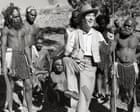
More than seven decades after British cameras rolled in South Australia, a groundbreaking translation project has revealed the unscripted ingenuity of 120 Anangu extras in the 1950 film classic Bitter Springs.
The production, directed by Ralph Smart and backed by British film company Ealing Studios, has long occupied a unique position in Australian cinema. Starring Chips Rafferty alongside British comedian Tommy Trinder and a young Charles "Bud" Tingwell, the film was celebrated at the time as the first English-language feature produced in South Australia. More unusually for its era, it depicted the violent frictions of pastoral expansion, portraying a white farming family attempting to claim land and waterholes already occupied by Traditional Owners.
Subverting the Settler Script
Yet beneath the surface of the mainstream production lay a parallel story that remained undeciphered by non-Indigenous audiences for generations. As The Guardian Australia reported, white filmmakers had instructed the local Anangu cast members to simply invent their own dialogue on set, operating on the presumption that their speech would function merely as atmospheric background chatter.
Instead of delivering inconsequential filler, the desert actors exercised remarkable creative autonomy. The ongoing translation effort has revealed that the Anangu performers used the opportunity to craft a rich, sophisticated commentary on the action, speaking in their traditional languages to articulate their perspective on the events unfolding before the lens. Researchers working on the linguistic project have highlighted the extraordinary wit, resilience, and storytelling mastery embedded within their spoken lines.
The Long Rail Journey from Ooldea
The physical reality behind the production was arduous for the Indigenous participants. Approximately 120 people from the remote community of Ooldea in the central desert were placed in train carriages and transported over two days across hundreds of kilometres to the railway hub of Quorn in the Flinders Ranges.
For their modern descendants, the preserved celluloid provides an emotionally charged genealogical bridge. Among those watching the film decades later was Vonda Last, who recognised her grandfather, Thumu Pluto Hicks, on screen. For families across central and southern Australia, the project transforms an imperial cinematic relic into a vital living archive of their ancestors' faces, physical presence, and distinct voices.
Reclaiming Cultural Memory
The linguistic record preserved in the audio tracks holds profound value for the continued maintenance of desert languages. During an era characterised by aggressive assimilation policies and government efforts to suppress Indigenous cultures, the recording captures fluent, complex ancestral dialogue spoken prior to significant post-war societal disruptions.
While Bitter Springs was originally praised by film critics for attempting to challenge uncritical pioneer mythologies, the translation of the Anangu dialogue reveals that the most trenchant critique came directly from the Aboriginal cast themselves. By speaking directly to their own communities rather than the colonial gaze, the performers ensured that their truth outlived the script handed to them.


