
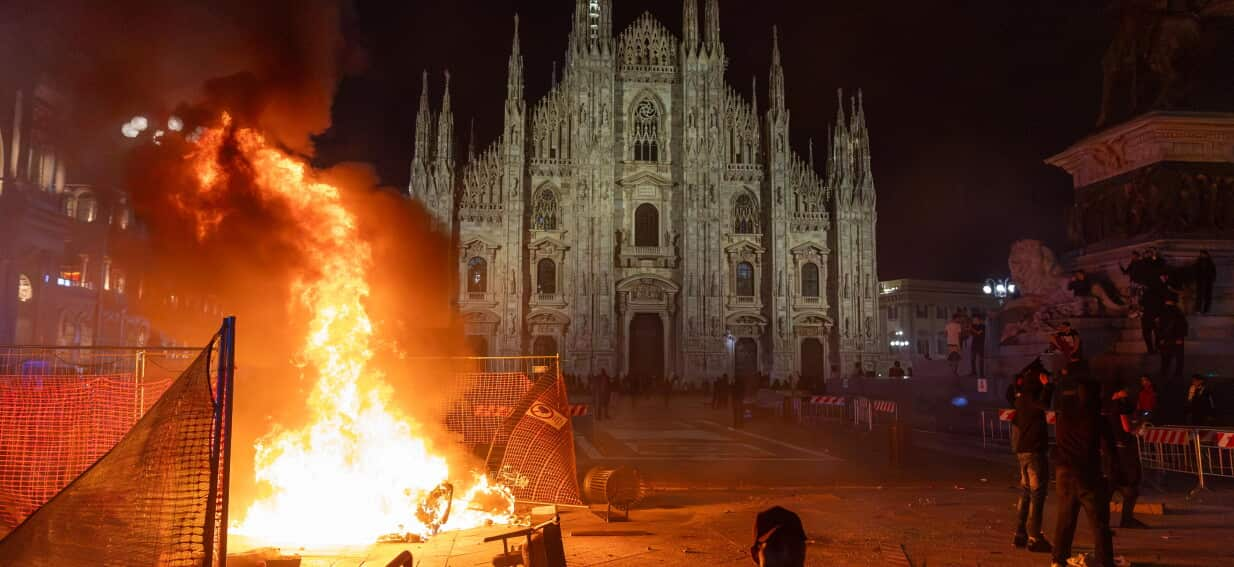
The Italian government has deployed armed troops onto the streets of Milan following destructive riots in the Piazza del Duomo, triggering severe manufacturing halts across the nation's quintessential pasta industry.
SBS News Top Stories reported that protesters smashed shop windows, looted commercial premises and lit fires across the historic plaza, transforming Italy's financial and fashion capital into a theatre of civil unrest. The escalating violence prompted immediate intervention from Rome, with authorities ordering military personnel to restore order alongside heavily fortified police lines.
Escalation in Piazza del Duomo
The violence erupted overnight following simmering social tensions, quickly overwhelming local carabinieri. Demonstrators targeted retail outlets and municipal infrastructure, leaving charred debris across the iconic square fronting the cathedral.
SBS News Top Stories reported that rioters engaged in coordinated property destruction, forcing the closure of central transport hubs and major thoroughfares throughout Lombardy. Emergency services worked through the early hours to contain blazes that threatened adjacent heritage facades, while authorities moved swiftly to cordon off the city centre.
Italian officials confirmed that the military deployment was designed to protect key logistical infrastructure and sensitive civic assets while frontline police pushed to disperse violent splinter groups.
Supply chains fracture across Lombardy
Beyond the civil damage, the turmoil has dealt an immediate blow to Italian agribusiness. Northern transit corridors, essential for hauling durum wheat from agricultural belts to industrial processing centres, have ground to a near-complete standstill.
Processing plants and regional distribution networks across northern Italy have suspended operations, stranding consignments of semolina and packaged goods. Freight operators have refused to navigate transit lines near Milan due to the ongoing volatility, leaving commercial depots paralysed.
The sudden interruption has brought output at several major pasta manufacturing facilities to a halt, raising alarms across domestic wholesalers and European distribution channels reliant on daily freight departures.
Global market exposures and Australian implications
The bottleneck in Italy’s food sector presents mounting concerns for international importers, including major Australian supermarket chains and specialty European wholesalers.
While domestic Australian wheat production remains robust, the country imports tens of millions of dollars annually in premium Italian dry pasta, canned tomatoes, and packaged staples. Prolonged factory downtime or freight disruptions at northern Italian hubs could introduce immediate freight surcharges and tighten shelf inventory within weeks.
Industry analysts estimate the economic fallout could cost hundreds of millions of euros, with transport and property damage claims already mounting into tens of millions of Australian dollars. With military patrols established across Milan, manufacturers remain uncertain as to when raw grain shipments will resume uninterrupted passage to factory floors.


