The 2026 FIFA World Cup final in the United States may have concluded, but the memory of its bizarre off-field theatrics, rather than the football itself, is set to endure. What was billed as the pinnacle of global sport morphed into a Hollywood-esque extravaganza, featuring an unscheduled appearance from former US President Donald Trump and a half-time show that stretched the boundaries of traditional sporting entertainment, much to the bemusement and, at times, frustration of fans and pundits alike.
Presidential Pitch-Side Pomp
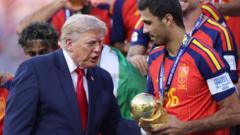
In a move that caught most by surprise, Donald Trump, a prominent figure in American politics and now a private citizen, made an unexpected pre-match appearance at the final. While the specifics of his involvement remain somewhat nebulous, BBC Sport reported that his presence was a significant talking point, drawing both cheers and jeers from the capacity crowd. Details emerged of a brief address, reportedly touching on themes of American exceptionalism and the nation's capacity for hosting grand events, further blurring the lines between sport and statesmanship. The impromptu speech, delivered pre-game, set an unconventional tone for the high-stakes encounter that was to follow, immediately distinguishing this final from its predecessors.
The Marathon Mid-Game Meltdown
Perhaps the most defining, and divisive, moment of the 2026 final was the half-time interval. What typically serves as a brief pause for tactical adjustments and a quick entertainment slot ballooned into an unprecedented 45-minute spectacle. This extended break, according to BBC Sport, was filled with performances from an eclectic mix of global superstars, including pop icon Justin Bieber and Colombian sensation Shakira. While the performers delivered high-energy sets, the sheer duration of the interlude tested the patience of many viewers and players. Social media was awash with commentary, oscillating between awe at the scale of production and exasperation over the disruption to the flow of the game. For players, it presented an unusual challenge, impacting their physical preparation for the second half and potentially influencing the game's momentum.
Unpacking the US Sporting Spectacle
The extended half-time and celebrity-heavy pre-game set a new benchmark for how major sporting events might be presented, particularly in the United States, where entertainment often takes precedence. The decision to integrate such a colossal entertainment package into the final underscores a broader trend in US sports, where the game itself is often just one component of a larger, immersive experience designed to appeal to a broad demographic, not just traditional football enthusiasts. The reported cost of such an extensive production would undoubtedly run into the tens of millions of Australian dollars, a significant investment aimed at maximising global viewership and commercial appeal. This approach, while commercially astute, inevitably raises questions about the core athletic integrity of the event.
Global Opinions Divided on the Farcical Final
Reaction to the final's unconventional elements has been sharply divided. Traditional football purists lamented what they perceived as an unnecessary distraction from the sport's essence, arguing that the spectacle overwhelmed the athletic contest. Many Australian fans, typically accustomed to a more understated approach to sporting events, expressed bewilderment at the extravagance. Conversely, proponents argue that such an approach is vital for expanding football's reach, particularly in markets where it contends with established domestic sports. They see the blend of sport and entertainment as a necessary evolution to capture new audiences and generate unprecedented revenue. The debate sparked by the 2026 final is likely to continue for years, influencing future discussions around the balance between sporting tradition and global entertainment.