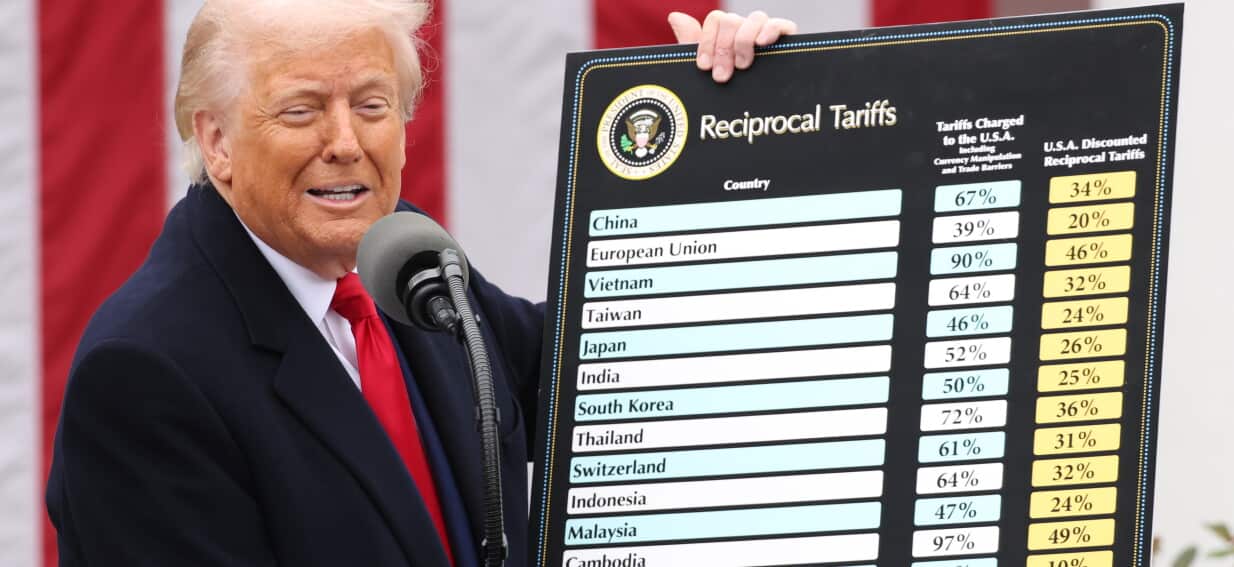
The recent announcement of an estimated A$250 billion “refund” for American businesses due to a tariff technicality might sound like a windfall, but experts are cautioning that this apparent victory for the US masks a far more insidious and enduring threat to global economic stability. The underlying issue, according to analyses, is former President Donald Trump's demonstrated willingness to deploy tariffs as a weapon, creating a persistent climate of uncertainty that casts a long shadow over international trade.
While the US Customs and Border Protection agency is reportedly in the process of disbursing these significant funds – collected on imports from China during the Trump administration and later deemed unlawful by a World Trade Organisation (WTO) panel – the real cost, SBS News Top Stories reported, extends far beyond mere financial figures. This retrospective refund, while substantial, underscores a deeper malaise: a global trading system increasingly vulnerable to unilateral actions and unpredictable policy shifts, with profound implications for nations like Australia that rely heavily on stable, rules-based trade.
The Lingering Chill of Uncertainty
The most damaging aspect of Trump's trade policies wasn't just the imposition of tariffs, but the very real possibility they could be imposed at any given moment, often without clear justification or process. This unpredictability has sent shivers through boardrooms worldwide. Australian businesses, for instance, accustomed to navigating a largely predictable international trade landscape, now face the daunting prospect of sudden market shifts and punitive duties, even from allies. The “refund” itself, while financially beneficial to US importers, is a retrospective fix to a problem that caused years of supply chain disruption, increased costs, and investment paralysis. It doesn't allay fears of future tariff wars; if anything, it highlights the precedent set for such actions.
Australia’s Vulnerable Position
For an open economy like Australia, deeply integrated into global supply chains and heavily reliant on exports, this persistent uncertainty poses a significant – if indirect – threat. While Australia might not be the direct target of US tariffs, the ripple effects of a destabilised global trading environment are inevitable. Reduced global trade volumes, increased protectionist sentiment, and the erosion of multilateral institutions like the WTO directly impact Australia's economic outlook. Our exporters face higher costs, greater administrative burdens, and reduced access to markets if the rules-based order continues to fray. The A$250 billion refund to American companies, while a US-specific issue, serves as a stark reminder of the economic instability that can arise from geopolitical tensions manifesting as trade disputes.
Erosion of the WTO and Rules-Based Trade
The WTO's ruling against the US tariffs, and the subsequent refund, highlights the ongoing tension between national economic interests and international trade law. However, the very fact that such large-scale tariffs were implemented for an extended period – and arguably forced a refund of this magnitude – significantly undermines the authority and effectiveness of the WTO. This erosion of multilateral institutions is a critical concern for Australia, which historically champions a rules-based international order. Without a strong, impartial arbiter like the WTO, trade disputes risk devolving into tit-for-tat protectionism, with smaller economies disproportionately bearing the brunt. The “refund”, in this context, is less an admission of error and more a symptom of a larger systemic challenge to global trade governance.