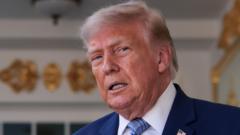
Washington D.C. / Brussels – Former US President Donald Trump has fired a warning shot across the Atlantic, vowing to launch an investigation into the European Union and insisting that the substantial fines imposed on American tech giants be "entirely reversed." This aggressive stance, if acted upon, threatens to ignite a fresh trade war between the United States and its European allies, with potential ramifications for global commerce and the digital economy.
Trump’s comments, originally reported by BBC World, specifically cited Google, along with other Silicon Valley titans Apple, Meta (formerly Facebook), and Amazon, as companies unfairly targeted by European regulators. The former president, who is actively campaigning for a return to the White House, framed the EU's actions as a predatory attack on American innovation and economic prowess.
A History of European Scrutiny
The EU has long been a global leader in antitrust enforcement, particularly against the dominance of major tech companies. Over the past decade, Google alone has faced billions of euros in fines from the European Commission for alleged anti-competitive practices, including privileging its own services in search results and restrictive contracts with smartphone manufacturers. Apple has been scrutinised over app store policies, Meta for data privacy and market dominance, and Amazon for its treatment of third-party sellers.
These enforcement actions, often resulting in penalties exceeding hundreds of millions or even billions of Australian dollars, are rooted in the EU's robust competition laws designed to ensure a level playing field and protect consumers. European officials routinely argue that these fines are not politically motivated but are the result of thorough investigations into breaches of competition law. They contend that unchecked market power by tech giants stifles innovation and harms smaller competitors.
Retaliation and Economic Headwinds
Trump’s threat of an investigation and demand for reversals could herald a combative new era in US-EU relations, should he regain the presidency. During his previous term, the Trump administration engaged in numerous trade disputes, imposing tariffs on European steel and aluminium and threatening duties on European automobiles. Such actions invariably led to retaliatory tariffs from the EU, creating an environment of uncertainty for businesses and consumers on both sides.
Economists have warned that a renewed trade conflict could severely impact already fragile global supply chains and economic growth, particularly as economies grapple with post-pandemic recovery and inflationary pressures. Australian exporters, who rely on stable international trade relationships, could also face indirect consequences from any transatlantic trade escalation.
Digital Sovereignty vs. American Dominance
The core of this transatlantic tension lies in differing philosophical approaches to the digital marketplace. The EU has consistently championed “digital sovereignty,” aiming to regulate the internet and its dominant players to align with European values and protect its citizens' data and economic interests. This often puts it at odds with the US, which generally favours a more hands-off approach to its domestic tech champions and views attempts at stringent regulation as overreach.
If Trump were to follow through on his promises, the EU would likely stand firm, viewing any US investigation as an attempt to undermine its sovereign right to regulate its own market. This ideological clash, combined with the significant financial stakes involved – fines against these companies collectively run into the tens of billions of dollars – sets the stage for a potentially destructive showdown. The future of transatlantic digital policy, and indeed global trade, hangs in the balance as the prospect of these investigations looms.