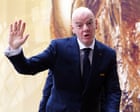
European football is on the brink of a major confrontation with global governing body FIFA, as UEFA convenes an emergency meeting to address Gianni Infantino’s controversial plan to sell off significant stakes in football’s premier competitions to private investors.
Directors from all 55 European member associations will gather for urgent talks on Thursday afternoon (Australian time) to formulate a coordinated response, with a potential boycott of FIFA tournaments reportedly on the table. The escalating tensions, first reported by Guardian Australia Sport, signal a serious rift within the sport's global power structure over the commercialisation of its most iconic events.
Privatisation Proposal Ignites Fury
At the heart of the dispute is FIFA President Gianni Infantino's ambitious, and highly secretive, proposal to create new competitions and expand existing ones, primarily the men’s World Cup and Club World Cup, by selling off equity to a consortium of investment funds. This plan, estimated to be worth approximately A$38 billion over 10 to 12 years, has been met with fierce resistance from UEFA and several top European clubs who view it as an unwelcome intrusion into football's governance and an opaque attempt to seize control of the game’s most valuable assets.
UEFA, which organises Europe's prestigious Champions League, believes it has not been adequately consulted on the proposals and sees them as a direct challenge to its authority and financial stability. The European body has consistently expressed concerns over the lack of transparency surrounding the identity of the investors and the long-term implications for the sport, particularly regarding the distribution of power and profits.
Boycott Looms as a Severe Option
Among the drastic measures being considered by UEFA is a boycott of FIFA tournaments, a move that would send shockwaves through international football. While such a step would be unprecedented, the strong language emerging from European football circles indicates a willingness to employ significant leverage. Guardian Australia Sport reported that early discussions have even mentioned the prospect of boycotting next year’s Women’s World Cup.
However, this particular option faces considerable internal resistance, with concerns that making the women's game suffer would be a deeply unpopular consequence of a protest primarily aimed at the monetisation of the men's tournaments. Any decision on a boycott would undoubtedly be weighed against the potential damage to the sport's integrity and its fans.
Seeking a United European Front
The Thursday meeting is crucial for UEFA to present a united front against FIFA. Historically, Europe has been a dominant force in world football, both on the pitch and in governance. A fragmented response would likely weaken UEFA's bargaining position against Infantino, who has been aggressively pushing his reform agenda. The goal will be to consolidate European opposition and present FIFA with a clear, unequivocal statement of intent.
The outcome of these talks will have profound implications for the future of international football. With billions of dollars at stake and the very structure of the game under scrutiny, the standoff between UEFA and FIFA is set to define the sport’s economic and political landscape for years to come. The Sydney Daily News will continue to monitor this developing story closely.