
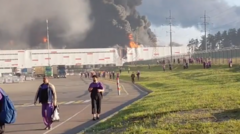
Ukrainian forces have launched a series of calculated drone strikes on significant online retail warehouses within Russia, including facilities belonging to the e-commerce behemoth Wildberries. The attacks, which reportedly caused significant damage and fatalities, represent a new front in Ukraine's strategy to cripple Russia's war effort and economy, targeting not just military infrastructure but also civilian logistics.
BBC World reported that the strikes hit Wildberries facilities near Moscow and in Tambov, raising concerns about the security of Russia's domestic supply chains and the potential for a ripple effect on consumer access to goods. Ukraine's leader has publicly stated that these facilities were targeted due to their role in supplying what he described as "sanctioned components," suggesting a deliberate effort to interdict crucial imports.
Explosions Rock E-commerce Hubs
The attacks on the Wildberries logistics centres sent shockwaves through Russia's online retail sector. Unconfirmed reports detail substantial damage to the warehouses, which are central to the distribution network of one of Russia's largest e-commerce platforms. The specific nature of the damage and any potential loss of stock remain unclear, but the sheer scale of the targeted facilities suggests a considerable disruption to Wildberries' operations. These warehouses are typically immense structures, often spanning hundreds of thousands of square metres, designed for high-volume storage and rapid dispatch of goods across vast geographical areas. Any significant damage would necessitate extensive repairs and logistical rerouting, incurring considerable financial costs, potentially running into tens of millions or even hundreds of millions of Australian dollars, and leading to prolonged delays in product delivery for millions of Russian consumers.
A Broader Economic Strategy
These strikes are being interpreted by analysts as part of a broader Ukrainian strategy to apply sustained economic pressure on Russia. By targeting key points within civilian supply chains, Kyiv aims to disrupt the flow of both domestic and imported goods, hoping to inflict economic pain and exacerbate existing shortages. While direct military targets remain a priority, the expansion of drone operations to include logistics hubs supporting the wider economy signals a potential shift towards a more comprehensive approach to undermining Russia’s ability to sustain its war machine and maintain public morale. The intent is clear: to make Russia's war in Ukraine increasingly costly and disruptive for its own citizens and industries.
The Sanctioned Component Angle
One critical dimension highlighted by Ukraine's leader is the alleged connection between these warehouses and the supply of "sanctioned components." This claim, if verified, suggests that the attacked facilities were not merely storing consumer goods but were also crucial conduits for materials or technologies restricted under international sanctions. Such components could include dual-use items – products with both civilian and military applications – ranging from advanced electronics and semiconductors to specialised machinery parts. If Russia has been leveraging its vast e-commerce infrastructure to circumvent sanctions and secure components vital for its defence industry or other strategic sectors, then these strikes represent a significant blow to those efforts, potentially hindering Moscow's ability to produce or repair military equipment. The economic impact of such a disruption would be substantial, potentially setting back Russian industrial capabilities by months.
While the full extent of the damage and the long-term impact on Russia’s logistics and economy are still unfolding, these drone strikes underscore the evolving nature of the conflict. Ukraine appears to be increasingly willing and capable of projecting force deep into Russian territory, targeting critical infrastructure that underpins both the civilian economy and potentially, the military's operational capabilities.