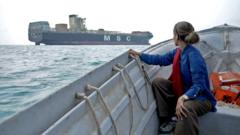
The Strait of Hormuz, a critical maritime choke point, is experiencing an uneasy calm. A recent BBC World investigation from Bandar Abbas, Iran, reveals a port city grappling with the profound impact of the US-Israeli conflict with Iran on the daily lives of its residents.
While the bustling port shows outward signs of activity, the undercurrent of geopolitical tension is palpable. Locals navigate an increasingly complex economic landscape, with sanctions and the threat of military escalation casting long shadows over their livelihoods.
Seized Vessels and Lingering Tensions
Among the visible scars of the conflict are numerous seized merchant vessels, their hulls rusting in the port, silent witnesses to the region's volatility. The BBC reported seeing several such ships, a stark reminder of the tit-for-tat seizures that have plagued the strait in recent years. These vessels, often impounded on vague pretences, represent significant economic losses and diplomatic headaches for their owners and respective nations.
For the residents of Bandar Abbas, these seizures are not abstract geopolitical events; they directly impact the port's activity and, by extension, the local economy. Dockworkers, traders, and ancillary services all feel the pinch when the flow of international shipping is disrupted or diverted due to perceived risks.
Economic Strain on the Waterfront
The economic fallout from the protracted tensions is evident in the marketplaces and on the docks of Bandar Abbas. While precise figures are difficult to ascertain due to the opaque nature of Iran's economy, anecdotal evidence suggests a downturn in trade and investment. The BBC noted a general sentiment of economic hardship among those interviewed, with many struggling to make ends meet in an environment of rising costs and diminished opportunities.
The value of the Iranian Rial continues to fluctuate wildly against major currencies like the Australian Dollar, making imports prohibitively expensive for many. Local businesses face challenges sourcing international goods and expanding their reach, further exacerbating the economic strain on families already contending with the daily realities of sanctions.
Shark Fishermen and Shifting Sands
Amidst the larger geopolitical drama, the BBC also highlighted the plight of Bandar Abbas's shark fishermen. Once a robust industry, shark fishing has faced increasing pressure not only from environmental concerns but also from the economic instability gripping the region. Smuggling, often a desperate measure in times of hardship, has reportedly increased, with fishermen sometimes resorting to illicit activities to supplement their dwindling incomes.
These fishermen, whose lives are intrinsically linked to the delicate ecosystem of the Persian Gulf, find themselves navigating not just treacherous waters but also the shifting sands of international politics. Their traditional way of life is under threat from multiple angles, symbolising the broader challenges faced by ordinary citizens caught in the crossfire of international disputes.
A Fragile Peace
The "uneasy calm" described by the BBC is a precarious state, easily shattered by a single incident. While major armed conflict has so far been averted, the constant threat of escalation hangs heavy over Bandar Abbas. Residents live with the psychological burden of potential military action, an ever-present fear that colours their daily existence.
For Australia, a nation heavily reliant on the Strait of Hormuz for its oil and gas imports, the developments in this region are of significant concern. Any major disruption could have profound implications for global energy markets and, consequently, for Australian consumers and businesses. The stability of this vital waterway remains a critical element in global trade and resource security, underscoring the importance of understanding the human cost of geopolitical tensions in places like Bandar Abbas.