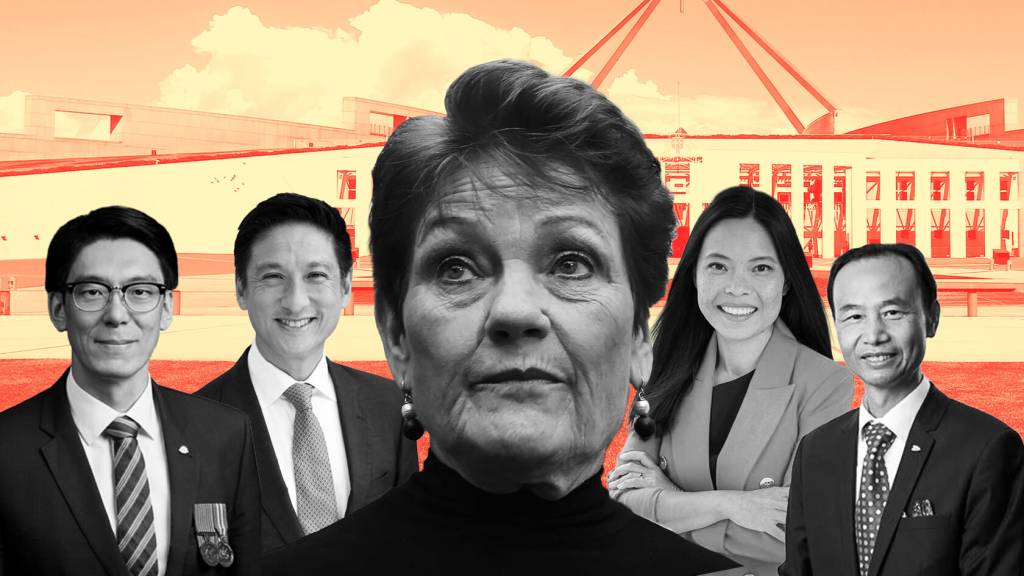
While Chinese-Australian politicians increasingly unite against Pauline Hanson's contentious immigration stances, a perplexing reality persists: a segment of the Chinese-Australian community continues to support the One Nation leader, despite her undeniable history of anti-Chinese sentiment. This apparent paradox, explored in depth by Crikey, highlights a nuanced political landscape defying simple categorisation.
Generational Divides and aspirational politics
One significant factor in this unexpected allegiance appears to be generational. Older Chinese-Australians, particularly those who immigrated from mainland China, often prioritise economic stability and a perceived commitment to law and order. For these voters, Hanson's rhetoric on fiscal responsibility, lower taxes, and strong borders might resonate more powerfully than her inflammatory comments on race or immigration. Crikey notes that some within this demographic admire what they see as Hanson's 'straight talk' and her willingness to challenge the political establishment, viewing it as a strength rather than a weakness.
Furthermore, aspirational politics plays a crucial role. Many Chinese-Australians are small business owners or have a strong focus on upward mobility. Policies that promise economic freedom, reduced red tape, and less government intervention could appeal, regardless of the source. The desire for their children to prosper in a stable, prosperous Australia can sometimes override concerns about social inclusiveness, particularly if they feel economically mainstream parties are failing to deliver on these core promises. This often translates to support for conservative policies, with One Nation's economic platform sometimes overlapping with these desires.
The Allure of 'Strong Australia' Narratives
Another layer of complexity stems from perceptions of national identity and sovereignty. Some Chinese-Australians, particularly those who have come from authoritarian regimes, may view Hanson's robust defence of Australian sovereignty, even against perceived external threats, through a different lens. They might interpret her 'Australia First' stance as a protective measure, ensuring the stability and strength of their adopted home rather than as a discriminatory statement. Crikey highlighted that this perspective often prioritises national unity and perceived strength over multicultural ideals championed by other political factions.
This can also manifest as a desire for integration, albeit on their own terms. Some voters may believe that a 'strong Australia' means less immigration overall, even if they themselves are immigrants. They might view uncontrolled immigration as a threat to societal cohesion, echoing anxieties found in broader Australian society. This subtle but significant alignment on immigration numbers, rather than specifics of origin, can draw some Chinese-Australians towards Hanson's platform.
Beyond Race: Addressing Different Grievances
It’s crucial to understand that for some Chinese-Australian voters, their primary grievances might not be racial but rather socio-economic or political. Dissatisfaction with mainstream parties over issues like housing affordability, freedom of speech, or what they perceive as excessive 'political correctness' can drive them to alternative political voices. One Nation, with its populist appeal and anti-establishment message, can then become an unexpected vehicle for expressing these frustrations.
For instance, some may feel that their voices are not being heard by the major parties on issues important to their community, such as religious freedoms or nuanced views on international relations. In such cases, a party like One Nation, despite its historical baggage, might be seen by some as more willing to engage with what they perceive as 'common sense' issues, rather than what they view as niche identity politics. The phenomenon underscores that identity is multi-faceted, and voters often prioritise different aspects of their identity and concerns when casting their ballot, creating a political tapestry far richer — and more complex — than initially meets the eye.