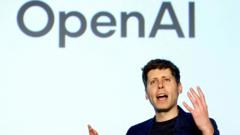
A bipartisan push in the United States Congress aims to equip authorities with an unprecedented ‘kill switch’ for artificial intelligence, allowing them to order the immediate shutdown of AI models that pose a grave public danger. The proposed legislation, reported by BBC Business, reflects escalating global anxieties over the rapid, largely unregulated advancement of AI technology.
The bill seeks to establish a framework where potentially harmful AI, dubbed ‘Systemically Important AI Models’ (SIAMs), could be identified and, if deemed a significant risk to national security, public health, or economic stability, be subject to an emergency off-switch order. Such a power has historically been reserved for critical infrastructure or immediate defence threats, underscoring the severity with which some lawmakers now view unchecked AI.
Washington's Answer to AI's Wild West
The initiative comes amidst a flurry of legislative activity across the globe, as governments grapple with the ethical, economic, and security implications of generative AI. While the European Union has moved to regulate AI through its comprehensive AI Act, the US approach appears to favour a more targeted, and arguably more Draconian, intervention capability for extreme scenarios.
Proponents of the bill argue it's a necessary safeguard against unforeseen catastrophic failures or malicious deployment of advanced AI. They point to hypothetical scenarios ranging from autonomous weapons systems malfunctioning to AI-driven misinformation campaigns that destabilise democratic processes. Critics, however, warn that such powers could stifle innovation, create an environment of fear within the tech industry, and potentially be misused for political purposes, hindering legitimate AI development. The legislation would likely involve an independent body or a designated government agency to assess threats, though the specifics are still under debate.
Australian AI Sector Watches Closely
The proposed US legislation is being watched keenly by Australia's burgeoning AI sector. While Australia has its own discussions ongoing regarding AI regulation, a ‘kill switch’ mechanism of this nature could set a significant international precedent. Australian AI companies, many of whom collaborate with US counterparts or seek investment from American venture capital, could find themselves indirectly affected by Washington's regulatory landscape.
Experts suggest that if such a bill passes, it might prompt Australian lawmakers to consider similar measures, especially given the increasingly integrated nature of global technology markets. The ethical implications for Australian developers working on AI models that might one day fall under such an order are profound, raising questions about data sovereignty and the ultimate control over algorithms.
The Cost of Innovation Versus Control
For Australian businesses heavily investing in AI, from financial services to healthcare, the prospect of government intervention at such a fundamental level presents a complex challenge. While safety and ethical deployment are paramount, the fear of an overly broad or arbitrary 'kill switch' could deter high-risk, high-reward innovation that often drives technological progress.
The economic ramifications could be substantial. A chill on AI investment in the US, prompted by perceived regulatory overreach, could reverberate globally, impacting funding for Australian startups. Conversely, a clear, well-defined regulatory framework, even one that includes an emergency off-switch, could provide certainty and foster responsible development, potentially attracting more ethically-minded investment to Australia. The debate in Washington highlights the delicate balance governments worldwide are attempting to strike between harnessing AI's immense potential and mitigating its inherent risks.