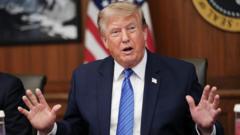
WASHINGTON DC: A significant legal battle has erupted in the United States, with a coalition of states launching a lawsuit against the Trump administration's sweeping new tariffs. The duties, imposed under the guise of combating forced labour, target some 60 countries and threaten to destabilise an already fragile global trade landscape.
According to reports from BBC Business, the tariffs are a direct response to claims that these nations have failed to adequately address forced labour within their supply chains. While the Trump administration asserts the measures are a necessary step to uphold human rights and fair trade, critics argue they are another thinly veiled protectionist tactic that will ultimately harm American consumers and businesses, alongside their international counterparts.
Tariffs Cast Long Shadow Over Australian Trade
The implications for Australia, though not directly targeted, are considerable. Many of the nations facing these tariffs are crucial trading partners for Australia, both in terms of imports and exports. Disruptions to these supply chains, particularly from major manufacturing hubs in Asia, could see Australian businesses facing higher costs and potential delays in accessing essential goods. Economists predict that the flow-on effect could ultimately be felt by Australian consumers through increased prices for a wide range of products, from electronics to clothing.
Industry bodies in Australia have already expressed apprehension, with some warning of potential price hikes for imported goods and a decrease in the competitiveness of Australian exports if global supply chains are rerouted or become more expensive. While the exact financial impact is yet to be fully modelled, the uncertainty alone is a cause for concern in boardrooms across the country. The Australian dollar, currently trading around US$0.66, could also face volatility as global trade sentiment shifts.
Legal Challenge Grounds and Broader Economic Risks
The lawsuit, spearheaded by states with significant import-export activity, argues that the Trump administration has overstepped its legal authority in imposing these tariffs. Legal experts suggest the challenge will centre on whether the executive branch has the constitutional power to levy such broad duties without congressional approval, especially when framed as a human rights issue rather than a traditional trade dispute. The states contend that the tariffs will inflict economic damage on their local economies, increase costs for businesses, and ultimately burden their citizens.
Beyond the legal merits, the broader economic risks are substantial. Global trade has been a contentious arena for the past few years, with numerous tariff disputes already straining international relations. This new front in the trade war, ostensibly fought on moral grounds, risks further fracturing global alliances and potentially leading to retaliatory measures from affected nations. The International Monetary Fund has previously warned that a sustained period of trade protectionism could significantly dampen global economic growth, and these new tariffs only heighten that concern.
Supply Chain Scrutiny and Ethical Sourcing Debate Intensifies
At the heart of the administration's justification is the issue of forced labour – a grave concern that resonates with consumers globally. The tariffs are intended to compel countries to strengthen their labour laws and enforcement, ensuring that goods entering the US market are produced ethically. However, critics argue that a blanket tariff approach is a blunt instrument that punishes entire economies, including businesses that may already be committed to ethical sourcing, rather than targeting specific egregious practices.
This development is likely to intensify the global debate around supply chain transparency and ethical sourcing. Australian companies, many of whom have already invested heavily in ensuring their supply chains are free from exploitation, will be watching closely. The pressure on businesses to demonstrate robust ethical sourcing practices will undoubtedly increase, driven by both regulatory actions and evolving consumer expectations, particularly if these tariffs gain traction or inspire similar actions from other major economies.