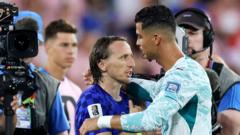
DOHA, QATAR – The FIFA World Cup in Qatar has once again been gripped by VAR controversy, as a highly disputed decision in extra time denied Croatia a last-gasp equaliser against Portugal, effectively ending Luka Modric's illustrious international career and propelling Cristiano Ronaldo further into what many believe is his final global showpiece.
The drama unfolded in a pulsating quarter-final clash that saw Portugal narrowly defeat a resilient Croatian side 2-1. As the clock ticked into the dying moments of extra time, with Croatia desperately pushing for an equaliser, a goalmouth scramble culminated in what appeared to be a legitimate Croatian goal. However, after a lengthy VAR review, the goal was disallowed for an offside infringement in the build-up, a decision that has sparked widespread debate and outrage amongst football pundits and fans alike.
The Moment of Truth and its Aftermath
The disallowed goal has proven to be the game's undeniable talking point. With Portugal leading 2-1 and Croatia throwing everything forward, a long ball into the box led to a chaotic sequence of events. A header deflected, falling to a Croatian attacker who bundled it into the net. The stadium erupted, only for the jubilation to be cut short by the referee's signal for a VAR check. Minutes later, the official pointed to a distant monitor, and after deliberating, signalled for an offside – a marginal call that BBC Sport reported hinged on millimetres and a player's active involvement in the play from an offside position.
The decision was met with immediate and vocal protests from the Croatian bench and players, who surrounded the referee seeking clarification. Their pleas, however, were in vain. The final whistle blew moments later, confirming Portugal's progression and sending the Croatian squad into despair. The emotional toll was palpable, with Modric, widely considered one of the greatest midfielders of his generation, visibly distraught as he contemplated the abrupt end to his World Cup aspirations.
Ronaldo's Extended Ballad, Modric's Bitter Farewell
For Cristiano Ronaldo, the controversial victory means another chapter in his remarkable World Cup narrative. The veteran forward, who is appearing in what is widely tipped to be his last World Cup, remains in contention for the coveted trophy. While not directly involved in the disallowed goal, the outcome undeniably benefited him and his Portuguese teammates, giving them another precious opportunity to compete on the grandest stage.
Conversely, for Luka Modric, the final whistle brought a bitter end to an extraordinary international career. The 37-year-old had captained Croatia with distinction, guiding them to a World Cup final in 2018 and consistently performing at an elite level. This tournament was almost certainly his last dance for the Vatreni, and to see it conclude under such contentious circumstances will undoubtedly leave a lingering sour taste. The midfielder, a true legend of the game, deserved a less dramatic and more definitive curtain call.
Debate Rages Over VAR's Role
The incident has reignited the perennial debate surrounding the application and impact of VAR in high-stakes matches. Critics argue that such marginal calls, especially those impacting crucial late-game moments, detract from the spontaneity and emotion of football. Proponents, however, maintain that VAR ensures fairness and corrects clear and obvious errors. This particular decision, however, has fallen squarely into the grey area, blurring the lines between objective fact and subjective interpretation.
Regardless of where one stands on the technology, the fact remains that VAR played a pivotal, and ultimately decisive, role in this World Cup quarter-final. The outcome has not only shaped the immediate future of the tournament but has also etched itself into the legacies of two of football's modern-day giants, for vastly different reasons. Australian football fans and pundits, like their international counterparts, will undoubtedly dissect this moment for years to come, considering its implications for the beautiful game and the often-frustrating complexities of modern officiating.