
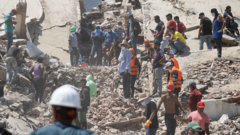
Caracas, Venezuela – A humanitarian crisis is unfolding in Venezuela following two powerful earthquakes that have left an untold number of people trapped under rubble, with rescue efforts largely falling to ordinary citizens armed with little more than crowbars and their bare hands. Aftershocks continue to rock the devastated regions, compounding the terror and challenging the already desperate attempts to find survivors.
The initial 7.3-magnitude quake, followed by a terrifying 6.4-magnitude aftershock just hours later, has obliterated swathes of infrastructure, transforming once-vibrant neighbourhoods into scenes of apocalyptic destruction. With official resources scarce in the embattled nation, the grim task of sifting through the debris has fallen to those directly affected – friends, family, and neighbours – working tirelessly against the clock and the constant threat of further collapses.
A Nation Scrambles for Survival
BBC World reported that eyewitness accounts paint a harrowing picture of communities acting as first responders. In scenes reminiscent of war zones, makeshift brigades are forming, using any available tools – from pickaxes typically reserved for construction to garden spades and even bare hands – to dig through the shattered remnants of homes and businesses. The air is thick with dust, the smell of concrete and humanity, and the desperate cries of those searching for loved ones.
While the exact death toll remains unconfirmed amidst the chaos, fears are mounting that it could be substantial. The lack of heavy machinery and organised rescue teams in many of the hardest-hit areas means that every minute counts, and for many, hope is fading as the critical 72-hour window for finding survivors begins to close. The quakes have not only destroyed buildings but have also fragmented communication networks and access roads, further isolating affected communities.
Scarcity Plagues Rescue Efforts
The economic and political turmoil that has gripped Venezuela for years has severely hampered any organised response to a disaster of this scale. Hospitals, already struggling with shortages of medicine and equipment, are now overwhelmed with the injured. Access to essential supplies such as clean water, food, and temporary shelter is becoming a critical concern for hundreds of thousands displaced by the quakes.
International aid organisations are reportedly mobilising, but the logistical challenges of delivering aid into and distributing it within Venezuela are immense. Securing safe passage for humanitarian convoys and ensuring that aid reaches those most in need, rather than being diverted, are major hurdles that need to be overcome rapidly. The dire economic situation means that many survivors have lost not only their homes but also their livelihoods, pushing them further into precarity.
The Lingering Threat of Aftershocks
The psychological toll on the population is immense. The continuous threat of aftershocks means that even those who have managed to escape their damaged homes are reluctant to return, instead congregating in open spaces, fearing further collapses. Children, in particular, are showing signs of severe trauma, clinging to parents and exhibiting heightened anxiety with every tremor.
For a nation already teetering on the brink, these natural disasters represent a catastrophic blow. The immediate priority remains finding survivors and providing urgent relief, but the long-term recovery will require an unprecedented level of national and international cooperation, far exceeding current capabilities. As the world watches, the Venezuelan people continue their grim excavation, one rubble-strewn handful at a time, holding onto dwindling hope in the face of overwhelming odds.