
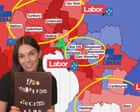
Victoria is barrelling towards a watershed state election in 2026, where an embattled, decade-old Labor administration will test voter endurance against a Coalition struggling to carve out a viable route to power.
After more than a decade under the Labor banner, Spring Street is bracing for a fiercely contested campaign that political observers believe will carry profound implications for the federation. Even with the Allan government confronting persistent voter fatigue and integrity scrutiny, securing the Treasury benches remains a steep climb for the Liberal-National Opposition.
Labor’s Long Shadow and Integrity Pressures
By the time Victorians head to the ballot box in late 2026, the incumbent Labor government will have occupied office for 12 continuous years. Long tenures inevitably invite public restlessness, but the administration is now juggling substantial fiscal headwinds, ballooning state net debt, and persistent controversies surrounding public administration.
As reported by The Guardian Australia, Labor enters the pre-election cycle beleaguered by integrity matters and repeated corruption-related scrutiny that have battered the party’s standing across metropolitan Melbourne. While the government has previously survived difficult political cycles through disciplined campaigning and infrastructure delivery, senior party strategists concede that the electorate’s tolerance has worn thin, particularly across outer-suburban mortgage belts where cost-of-living pressures hit hardest.
The Coalition’s Arduous Electoral Arithmetic
Under ordinary political conditions, an exhausted third-term government would offer fertile ground for a change of regime. Yet the Coalition’s path to a majority is constrained by structural and demographic hurdles that have compounded over successive defeats.
To govern in its own right, the Coalition requires a sweeping swing across suburban Melbourne, a metropolis that has historically proven hostile to conservative messaging. Factional divisions, seat distributions, and changing demographics in key marginals have complicated Opposition attempts to re-establish a decisive foothold in the state's expanding growth corridors.
The Rise of Volatile Three-Way Contests
The traditional two-party-preferred contest is increasingly being upended by aggressive third-party incursions. An analysis by The Guardian Australia highlighted that three-way races are set to define the electoral map, with both major parties vulnerable to flank attacks.
In the inner-city, the Greens continue to build formidable local operations capable of peeling progressive voters away from Labor's traditional territory. Concurrently, a resurgent One Nation is targeting regional centres and outer-metropolitan seats, capitalising on disillusionment among blue-collar and socially conservative cohorts. These splintered voting patterns inject unprecedented volatility into preference flows, meaning candidates could reach cross-bench contention on historically low primary votes.
A Redefined Parliament Looms for Spring Street
The convergence of voter discontent and multi-party fragmentation suggests the 2026 contest may not yield a conventional majority. Instead, the political architecture of Victoria appears destined for systemic change.
Should neither major party cross the threshold of 45 Legislative Assembly seats, the state will be thrust into minority governance negotiated against an assertive crossbench. Whether Labor secures a historic fourth consecutive term or the Coalition manages to end its decade in the wilderness, the next Victorian election will permanently recalibrate the boundaries of state power.


