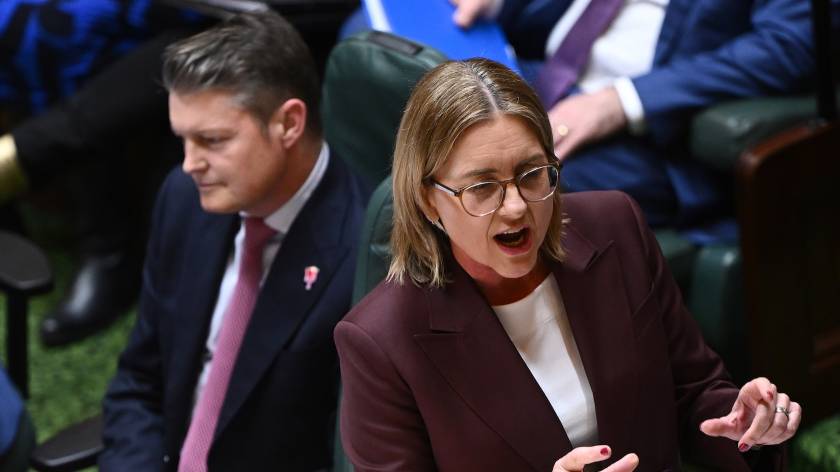
Melbourne is again the epicentre of political drama as the Victorian Labor partyroom convened at 10 am this morning under a cloud of uncertainty surrounding Premier Jacinta Allan's leadership. The Premier is facing mounting pressure and widespread speculation regarding a potential challenge, with many eyes on whether she intends to directly confront a leadership contest or seek a different path.
The high-stakes meeting comes amidst a broader narrative of instability for the state government. Political analysts and media outlets alike have highlighted deepening factional divides and a perceived lack of clear direction since the last state election. A significant portion of the tension within the party is understood to stem from recent policy decisions and the lingering fallout from various integrity probes that have plagued Victorian politics.
Union Stalwarts Step Down
Compounding the Premier's predicament, and adding another layer of chaos to the morning’s events, were the unexpected resignations of two prominent figures from the Australian Council of Trade Unions (ACTU). National Secretaries Sally McManus and Michele O'Neil both announced their immediate departures, effective this morning. The timing of their resignations, coinciding precisely with the heightened tensions in Victorian Labor, has not gone unnoticed by political commentators. Crikey, the independent news and analysis website, was among the first outlets to highlight the intertwined nature of these developments, noting that the double resignation significantly weakens the union movement’s traditional influence within the broader Labor Party structure.
While the exact reasons for McManus and O'Neil's departures remain officially undisclosed, speculation within political circles is rife. Some suggest a strategic move to potentially facilitate future political roles, while others point to internal disagreements within the ACTU or a pre-emptive response to anticipated changes within the broader Labor power-sharing agreements. Their absence leaves a considerable void at the helm of Australia’s peak union body and poses significant questions about the future direction of industrial relations advocacy.
The Allan Conundrum
Premier Allan, who ascended to the top job following the abrupt resignation of her predecessor, has faced a challenging tenure marked by persistent scrutiny and internal dissent. Today's expected leadership challenge is not an isolated incident but rather the culmination of weeks, if not months, of simmering discontent within various factions of the Victorian Labor Party. Crikey reported earlier in the week that several key backbenchers and some junior ministers had privately expressed concerns about the government's trajectory and its ability to connect with everyday Victorians grappling with cost-of-living pressures.
The Premier’s office remained tight-lipped ahead of the partyroom meeting, releasing only a brief statement acknowledging the gathering. However, sources close to the party suggested a mood of apprehension, with delegates uncertain whether the Premier would mount a full-throated defence of her leadership or – as some have speculated – potentially opt for an alternative strategy to unify the party. The coming hours are critical, with any outcome set to ripple across the Victorian political landscape for months to come.
Implications for Governance
Should Premier Allan survive the leadership test, she will be tasked with the formidable challenge of uniting a deeply fractured party and restoring public confidence. A successful challenge, however, would plunge the government into even deeper uncertainty, potentially triggering a broader reshuffle and a period of instability. The implications extend beyond the party itself, affecting the government's ability to focus on pressing policy issues, including infrastructure projects, healthcare reforms, and the state's budget deficit, which is projected to be billions of dollars. The political instability also has the potential to overshadow genuine policy achievements and divert attention from the critical work of governing and meeting community expectations.