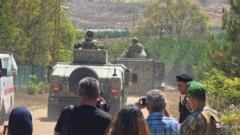
Residents are poised to return to several border villages in southern Lebanon, areas they contend were never legitimately occupied by Israel, under the terms of a new US-brokered agreement. This significant development marks a potential de-escalation of long-standing tensions along the volatile frontier, promising a return to normalcy for communities displaced by decades of conflict.
The handover, facilitated by American diplomatic efforts, involves Israel relinquishing control over specific zones within Lebanese territory. For many, particularly those living in the so-called 'pilot zone' villages, this represents a monumental victory, validating their claims against Israeli encroachment. Al Jazeera reported that the areas in question have been a flashpoint for disputes, with villagers having consistently asserted their sovereignty over the land.
Decades of Disputed Territory
The villages earmarked for return have been at the heart of a protracted territorial dispute, simmering since the 1978 and 1982 Israeli invasions of Lebanon. While Israel withdrew from most of southern Lebanon in 2000, some areas remained under de facto Israeli control or were subject to ongoing contention. Locals have consistently maintained that these weren't merely 'occupied' but were, in fact, never legally conceded. For generations, families have been unable to access their land, cultivate fields, or maintain community ties, leading to a deep-seated desire for restitution.
The current agreement is seen as a crucial step towards implementing UN Security Council Resolution 1701, which called for a full cessation of hostilities and respect for Lebanon's sovereignty after the 2006 conflict. While the resolution outlined a framework, practical implementation of border demarcation and troop movements has been fraught with challenges. The current US-led initiative appears to have finally broken some of the diplomatic stalemates.
Hope and Apprehension on the Border
For the returning residents, a mixture of unbridled joy and understandable apprehension defines the mood. While the opportunity to reclaim homes and land is a cause for celebration, the practicalities of rebuilding lives in a long-neglected region are daunting. Infrastructure, including roads, electricity, and water, will likely require significant investment. Furthermore, the psychological scars of conflict and displacement run deep, requiring sustained support for community re-integration.
Local authorities in Lebanon are understood to be coordinating efforts to facilitate a smooth transition, including assessing the condition of properties and planning for rehabilitation. The long-term security arrangements for these sensitive border areas will also be a critical concern, with both Lebanese armed forces and UN peacekeepers expected to play significant roles in maintaining stability.
A Broader Diplomatic Push
This agreement is not an isolated event but rather part of a broader diplomatic push in the region, aimed at stabilising flashpoints and normalising relations. The US, acting as a key mediator, has invested considerable effort in bringing both sides to the negotiating table, recognising the strategic importance of a stable Lebanese-Israeli border. While this particular deal focuses on specific village returns, its success could pave the way for further discussions on other unresolved territorial disputes and a more comprehensive border demarcation.
The financial implications of the resettlement and reconstruction efforts are substantial. While international aid is anticipated, the Lebanese government, facing its own severe economic challenges, will still need to allocate significant resources. The eventual cost of fully rehabilitating these returned territories could run into hundreds of millions of Australian dollars, highlighting the long road ahead despite this initial breakthrough.