
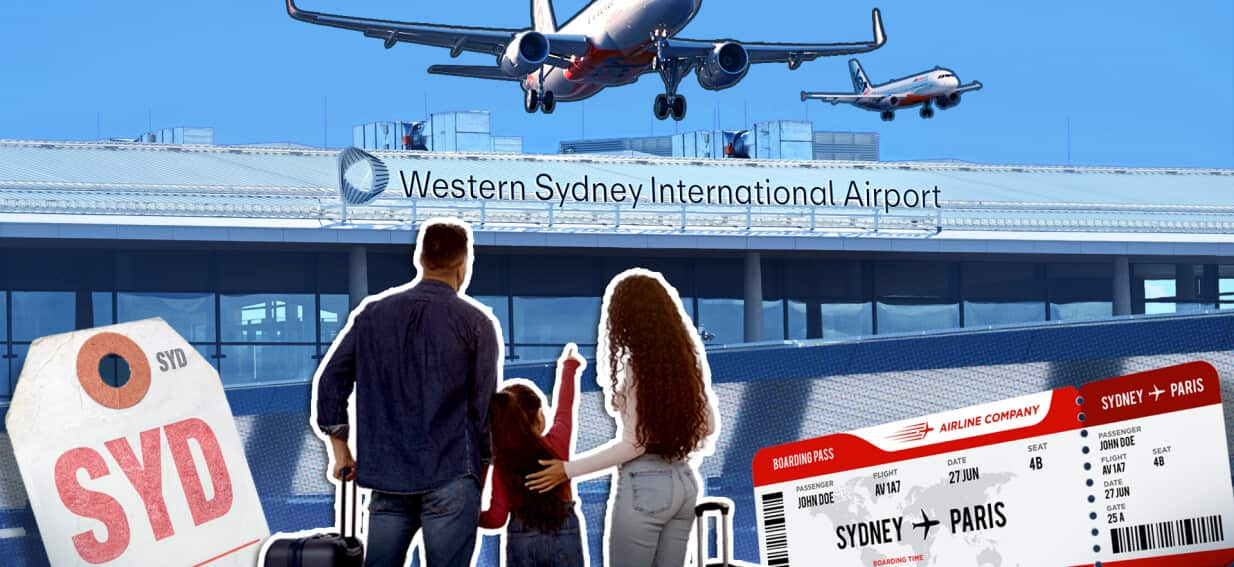
Sydney’s aviation landscape is on the brink of its most profound transformation in a century as Western Sydney International Airport moves closer to welcoming its inaugural commercial passenger flights.
With construction at the Badgerys Creek site entering its final operational stages ahead of a projected late-2026 opening, travellers across New South Wales are beginning to see the shape of the city’s second gateway. According to details compiled by SBS News Top Stories, the multi-billion-dollar infrastructure project is positioning itself as both an economic catalyst for western growth and an essential pressure valve for the increasingly congested Kingsford Smith Airport at Mascot.
Initial Routes and Carrier Commitments
Major domestic carriers have already staked their claims on the newly laid runway. Qantas and its low-cost subsidiary, Jetstar, were the first to formalise operational agreements, committing to base up to 15 aircraft at the airport within its first year of service. SBS News Top Stories reported that these domestic services will initially connect passengers directly to primary interstate capitals including Melbourne, Brisbane, and the Gold Coast, alongside key regional centres.
Negotiations with international operators remain active, with transport authorities targeting key Asia-Pacific and trans-Tasman routes ahead of opening day. Crucially, unlike Mascot, which remains constrained by a strict 11pm-to-6am curfew enacted in 1995, the new airport will operate 24 hours a day, offering overseas airlines and freight operators unprecedented scheduling flexibility.
Connecting Western Sydney to the Terminal
A critical test for the new precinct lies in surface transport accessibility across the sprawling Sydney basin. The Commonwealth and New South Wales governments have poured billions of dollars into complementary road and public transport links to integrate the terminal into the broader city network.
Central to this strategy is the Sydney Metro Western Sydney Airport line, a dedicated driverless rail link connecting the aerotropolis directly to the existing suburban network at St Marys. Road transit will be anchored by the new M12 Motorway, constructed to funnel vehicle traffic directly from the M7 and the wider arterial grid into the airport concourse. SBS News Top Stories highlighted that while initial rail journeys to the Sydney central business district will require an interchange at St Marys, future transport corridors are intended to reduce overall travel times.
Economic Stakes and Aerotropolis Design
Named in honour of pioneer aviator Nancy-Bird Walton, the terminal has been engineered with modern processing efficiency and environmental sustainability as guiding principles. Next-generation biometric border gates and automated baggage handling systems are being installed to keep transit times below those typically endured at older facilities.
Business chambers throughout the region view the project as the anchor for the surrounding Bradfield City Centre, projected to support tens of thousands of logistics, manufacturing, and technology jobs over the coming decades. While community groups under proposed flight paths continue to voice concern over nighttime noise pollution, aviation analysts maintain that the uncapped 24-hour operation remains indispensable to the economic future of the state.


