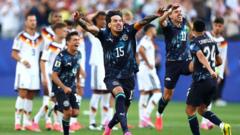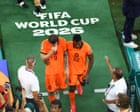
The FIFA World Cup 2026 has been thrown into disarray after two of football's traditional powerhouses, Germany and the Netherlands, were unceremoniously dumped out of the tournament in a stunning sequence of results that has reverberated across the globe.
Germany, a four-time World Cup winner, suffered a shock defeat at the hands of a determined Paraguay side, sending the European heavyweights packing far earlier than anticipated. Not to be outdone, the Netherlands, perennial contenders, also bid farewell to their World Cup dreams after being convincingly beaten by Morocco. The twin upsets leave the competition wide open and have set the stage for an unpredictable knockout phase.
Leopards Roar: DR Congo's Unifying Campaign
While the upsets grab headlines, one of the most compelling narratives emerging from this World Cup isn't just about goals and glory, but about national unity. The Democratic Republic of Congo's national football team, affectionately known as the Leopards, has captivated audiences with their assured progress through the tournament, a journey that holds profound significance for their diverse and often fractured nation.
Guardian Australia Sport highlighted the extraordinary impact of the Leopards' campaign, noting the deep resonance their success has had back home. The DRC, Africa's second-largest country, is a melting pot of hundreds of ethnic communities and languages, a nation grappling with profound political and societal fissures.
A Nation United by Football
As Louis Mukoma, writing for Guardian Australia Sport, articulated, the biggest story here transcends the sporting arena. The Leopards' achievements have provided a powerful, albeit temporary, balm for a country deeply scarred by decades of conflict, particularly in its eastern regions. These areas have long felt abandoned by the capital, Kinshasa, and the intensifying violence frequently reignites discussions about federalism, autonomy, and even national fragmentation.
Yet, a remarkable phenomenon occurs whenever the Leopards take to the pitch: those deep-seated divisions appear to pause. The shared passion for the national team creates a unifying force, drawing together disparate communities in a collective expression of national pride and hope. The team's unexpected success has given citizens a common cause, fostering a sense of cohesion rarely seen outside of these moments of sporting triumph.
Hope Beyond the Pitch
The team's journey to face England in a highly anticipated clash on Wednesday has given the people of the Democratic Republic of Congo something to rally around, an emblem of potential and shared identity. In a nation where over 80 million people earn an average income equivalent to approximately A$1.50 per day, the joy and distraction offered by the World Cup cannot be overstated.
The Leopards' inspiring run serves as a poignant reminder of football's unique power to transcend politics and provide a platform for intangible yet invaluable national healing. As the tournament progresses, the world watches not just the competition for the coveted trophy, but also the unfolding human stories, none more compelling than the unifying magic woven by the Democratic Republic of Congo's improbable success.