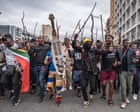
South Africa is teetering on the brink of widespread unrest as a wave of virulent anti-foreigner sentiment, stoked by a controversial deadline for undocumented migrants to leave the country, has sent thousands scrambling for safety.
On Tuesday, the nation held its breath as mass anti-immigration protests erupted across multiple cities, following a weeks-long campaign that has already claimed at least four lives and displaced tens of thousands. The fear is palpable, with many immigrants describing an environment where staying means facing potential violence and even death.
Durban on Edge as Protests Brew
In the normally bustling coastal city of Durban, where some of the most intense violence had been anticipated, an eerie quiet descended. Shops remained shuttered and streets largely deserted as over 2,000 anti-foreigner protesters marched through the city centre. The arbitrary deadline, set by certain local groups for undocumented migrants to depart, had just passed, amplifying the already significant tension. Reuters World reported that the air in Durban was thick with apprehension, a stark contrast to its usual vibrant energy. Residents, both local and foreign, spoke of a prevailing fear, with many choosing to stay indoors to avoid potential flashpoints.
A History of Targeting Foreigners
The current wave of xenophobia is not an isolated incident but rather the latest manifestation of a deeply troubling pattern in South Africa. The nation has a history of sporadic, often violent, uprisings against foreign nationals, particularly those from other African countries. These attacks are frequently fuelled by accusations that immigrants are “stealing” jobs and resources from South African citizens. Experts suggest that high unemployment rates and economic hardship contribute to the scapegoating of foreigners, creating a fertile ground for anti-immigrant rhetoric to take root and flourish. The political landscape, too, plays a role, with some factions capitalising on these grievances for populist gain.
The Human Cost of Fear
The toll on human lives and livelihoods has been devastating. Families have been separated, homes abandoned, and businesses destroyed. Many who have fled have lost everything, arriving at temporary shelters with little more than the clothes on their backs. Aid organisations are struggling to cope with the influx of displaced people, providing essential supplies and psychological support to a traumatised population. The international community, including Australia, is observing the situation with growing concern, urging the South African government to take decisive action to protect all residents and de-escalate the violence.
International Scrutiny and Calls for Action
The escalating crisis has drawn sharp criticism from human rights groups and international bodies. There are growing calls for the South African government to not only condemn the xenophobic attacks unequivocally but also to implement concrete measures to prevent further violence and to ensure the safety and dignity of all people residing within its borders. The long-term implications for South Africa’s standing on the global stage, as well as its economic stability, are significant. A continued failure to address the root causes of xenophobia and protect vulnerable populations could have profound and lasting negative consequences, impacting trade, tourism, and diplomatic relations. As the situation remains volatile, the world watches to see how South Africa navigates this complex and deeply troubling period.