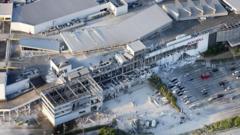
A destructive 7.1 magnitude earthquake has rocked Japan's southern island of Kyushu, prompting tsunami warnings and plunging residents into a state of terror. The powerful tremor, which struck the Kumamoto region, has caused extensive structural damage and raised fears of further aftershocks.
Al Jazeera reported the initial quake's magnitude at 7.1, with the Japan Meteorological Agency (JMA) swiftly issuing a tsunami advisory for coastal areas. While initial reports did not indicate a large wave, the JMA urged residents to remain vigilant and avoid approaching the coastline. The advisory was later downgraded, but the underlying anxiety remained palpable among the populace.
Crumbling Infrastructure and Terrified Residents
The force of the earthquake was immediately evident, with images emerging of collapsed buildings, buckled roads, and widespread power outages. In Kumamoto city, masonry crumbled from structures, and cracks appeared in numerous buildings, prompting evacuations. Emergency services were immediately mobilised to assess the damage and attend to any casualties. While there were no immediate reports of mass fatalities, several injuries were confirmed as people were caught off guard by the sudden jolt.
Residents described scenes of utter chaos. One local, interviewed by Japanese media, recounted furniture being thrown across rooms and the terrifying sensation of being unable to stand upright. Many spent the immediate aftermath outdoors, fearing further building collapses from aftershocks. The psychological toll on the community is expected to be significant, as memories of past seismic events in Japan are never far from the surface.
Nuclear Facilities Under Scrutiny
Of immediate concern following any significant earthquake in Japan is the status of its nuclear power plants. Regulators swiftly confirmed that all nuclear facilities in the affected Kyushu region were operating safely and without abnormalities. The Sendai nuclear power plant, located approximately 120 kilometres south of the epicentre, continued to operate normally, a spokesperson confirmed. Despite these reassurances, public apprehension around nuclear safety remains a sensitive topic in Japan, particularly after the Fukushima disaster in 2011.
Japan is one of the world's most seismically active nations, situated on the treacherous "Ring of Fire." Its stringent building codes and advanced early warning systems are designed to mitigate the impact of such powerful tremors, but the sheer force of a 7.1 magnitude event can still overwhelm even the best preparations. While the financial cost of this latest disaster is still being assessed, it is expected to run into the hundreds of millions, if not billions, of Australian dollars in repairs and reconstruction.
Aftershocks Compound Anxiety
Experts warned that more aftershocks were highly likely, exacerbating the fear and uncertainty among residents. The JMA urged people to remain on high alert for at least the next few days, advising extreme caution, especially when returning to damaged buildings. Local authorities have begun setting up emergency shelters, providing food and water to those displaced or too afraid to return to their homes. Communication lines were intermittently down, complicating rescue efforts and the dissemination of vital information.
The Australian Department of Foreign Affairs and Trade (DFAT) advised any Australians in the affected region to follow the advice of local authorities and to contact their families to let them know they are safe. Travellers planning trips to Kyushu were also urged to monitor local news and official advisories closely before departing. The full extent of the human and economic impact of this latest natural disaster will continue to unfold in the coming days and weeks.