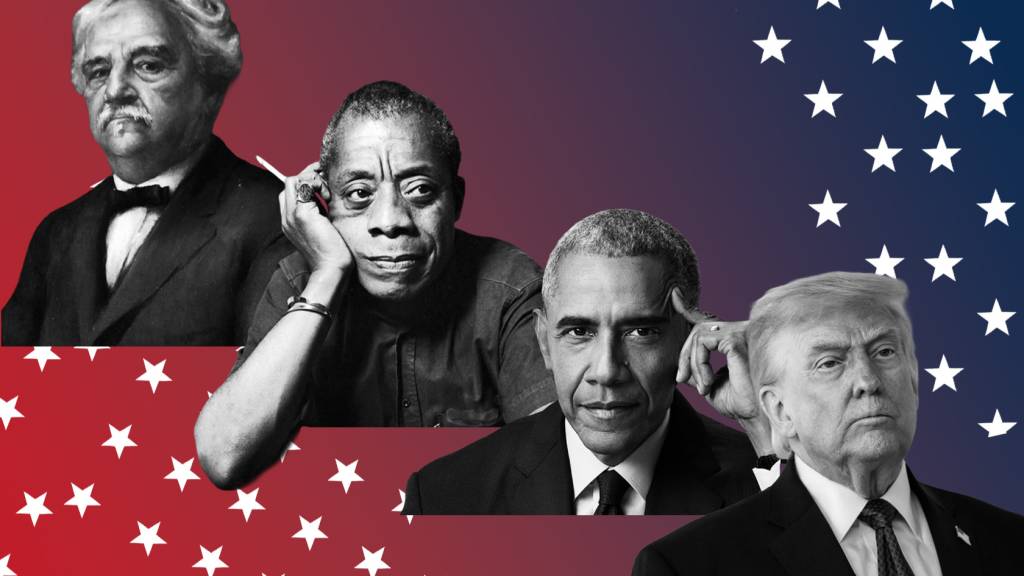
The United States, often lauded for its progress and democratic ideals, is in the throes of an "undeclared civil war," contends Australian news outlet Crikey. This provocative assertion suggests that the nation's 20th-century journey through civil rights advancements and their subsequent reversals has merely perpetuated a deep-seated struggle that continues to define its political and social landscape.
Crikey’s recent report, titled 'Soul of America Part 2: After an endless undeclared civil war, in comes the ‘first white president’', delves into the historical undercurrents that have led to the current state of American affairs. The piece posits that the election of ostensibly "white" presidents – a deliberately contentious framing – is not merely a political outcome, but a symptom of a nation perpetually at odds with its foundational promises of equality and justice.
The Echoes of a Century
The notion of an "undeclared civil war" isn't about traditional armed conflict, but a deeply ingrained societal battle over identity, power, and historical narratives. Crikey’s analysis draws a direct line from the tumultuous civil rights movements of the mid-20th century to the present day. The periods of significant racial progression, such as the gains made during the 1960s, were invariably met with fierce resistance and subsequent efforts to roll back those advancements. This pattern, the article suggests, has created a perpetual cycle of advancement and retrenchment, leaving deep scars on the national psyche.
Crikey highlights that each step forward in dismantling racial hierarchies has often been accompanied by a backlash that reinforces existing inequalities. These reversals are not always overt legislative repeals but can manifest as subtle systemic barriers, cultural shifts, or political rhetoric that appeals to a sense of lost dominance among certain demographics. This constant push and pull, the report implies, prevents any true reconciliation or resolution, keeping the "civil war" simmering beneath the surface of American society.
The 'First White President' Framing
The report's contentious framing of certain presidents as the 'first white president' after a period signifying racial progress is designed to provoke thought and highlight a perceived regression in America's racial discourse. While not identifying a specific individual, Crikey's language implies a leadership that, intentionally or otherwise, reinforces existing racial divisions or appeals to a demographic feeling disenfranchised by progressive movements. This is not about the literal racial background of a president but rather the symbolic message their presidency sends about national identity and who truly holds power.
This framing challenges the conventional narrative of linear progress in American race relations. Instead, it suggests a cyclical pattern where periods of racial enlightenment are followed by leadership that, by its actions or rhetoric, signals a return to a more racially stratified status quo. It forces readers to consider how leadership shapes, and is shaped by, the ongoing struggle for America’s soul, particularly concerning its racial dynamics.
Unpacking America's Enduring Divisions
Crikey’s analysis underscores that the current political climate in the US is not an anomaly but a logical continuation of this unresolved historical struggle. The deep partisan divides, cultural clashes, and social unrest visible today are, in this view, manifestations of these long-standing tensions. The economic disparities, justice system inequalities, and differing interpretations of American history all feed into this narrative of an ongoing conflict that has never truly been settled since the original Civil War.
The report encourages a critical examination of whether America has genuinely moved beyond its racial past or if it is merely experiencing different iterations of the same fundamental struggle. For Australian readers, it offers a stark perspective on a nation often viewed through the lens of its powerful economy and cultural exports, revealing a deeper, more turbulent reality. The article serves as a powerful reminder that even in developed democracies, the ghosts of history can continue to shape contemporary society, often leading to profoundly divisive consequences.