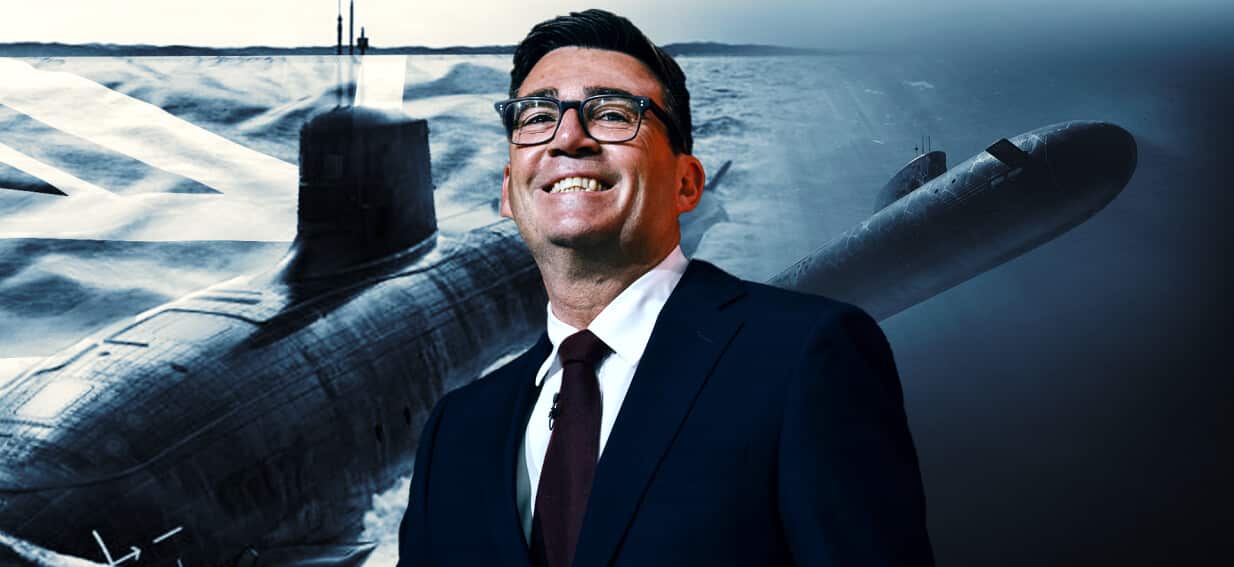
Australia's ambitious acquisition of nuclear-powered submarines under the AUKUS security pact has been thrust into an unexpected spotlight with the UK's recent political upheaval, as incoming Prime Minister Andy Burnham inherits a high-stakes diplomatic tightrope. Experts are now questioning how the new British leadership could fundamentally alter the trilateral agreement, potentially impacting Australia's long-term defence strategy and billions of dollars in investment.
The AUKUS pact, unveiled in 2021 by former Prime Minister Scott Morrison, involves the United States and the United Kingdom assisting Australia in developing and acquiring a fleet of nuclear-powered submarines. The agreement, valued at an estimated AUD $368 billion, is considered a cornerstone of Australia's defence posture against an increasingly assertive China in the Indo-Pacific.
Burnham's Stance: A Potential Policy Shift
Andy Burnham, the newly minted Prime Minister, enters Downing Street with a political platform that, according to SBS News Top Stories, diverges significantly from his predecessors on defence and foreign policy. While specific statements on AUKUS from Burnham are yet to be fully articulated, his past rhetoric has indicated a more cautious approach to international military commitments and a potential re-evaluation of high-cost defence projects. Analysts suggest that a Burnham premiership could prioritise domestic issues and a more non-interventionist foreign policy, potentially leading to a reassessment of the UK's financial and industrial commitments to the AUKUS submarine program. This shift could create considerable uncertainty for Canberra, which has banked on steadfast British support.
Australia's Strategic Crossroads
The Albanese government has consistently reaffirmed its commitment to AUKUS, viewing it as crucial for maintaining regional stability and safeguarding Australia's national interests. However, any wavering from the UK, a key partner in the technological transfer and development of the submarines, would force Canberra to confront difficult strategic choices. The proposed 'SSN-AUKUS' submarine design, intended to be a collaborative effort between the UK and Australia, could face delays or even fundamental redesigns if British participation diminishes. Defence analysts note that losing one of the three legs of the AUKUS stool would necessitate a significant recalibration, potentially leading to increased reliance on the United States or a search for alternative solutions, both of which carry their own complexities and costs.
Economic Implications for Taxpayers
The financial implications for Australian taxpayers are enormous, with the AUKUS program already earmarked as the largest defence investment in the nation's history. Any significant alteration to the UK's involvement could have direct financial consequences, including potential cost blowouts, renegotiations, and the need for new financial agreements. Should the UK withdraw or scale back its participation, Australia might be forced to bear a larger share of the development and production costs, pushing the already substantial AUD $368 billion price tag even higher. Such a scenario would undoubtedly spark intense political debate and public scrutiny over the value and viability of the pact.
Diplomatic Ripple Effects Across the Indo-Pacific
The long-term repercussions of a shifted AUKUS dynamic extend beyond just defence capabilities and budget lines. The pact was also designed as a strong signal of Western alignment and collective resolve in the Indo-Pacific. Any perceived weakening of the agreement, particularly due to a change in UK leadership, could be interpreted differently by regional players, including allies and potential adversaries. It could prompt a re-evaluation of alliances and security architectures in the region, potentially creating a vacuum or encouraging alternative alignments. The coming months will undoubtedly test the diplomatic prowess of the Albanese government as it navigates this evolving geopolitical landscape alongside a new and potentially less predictable British partner.