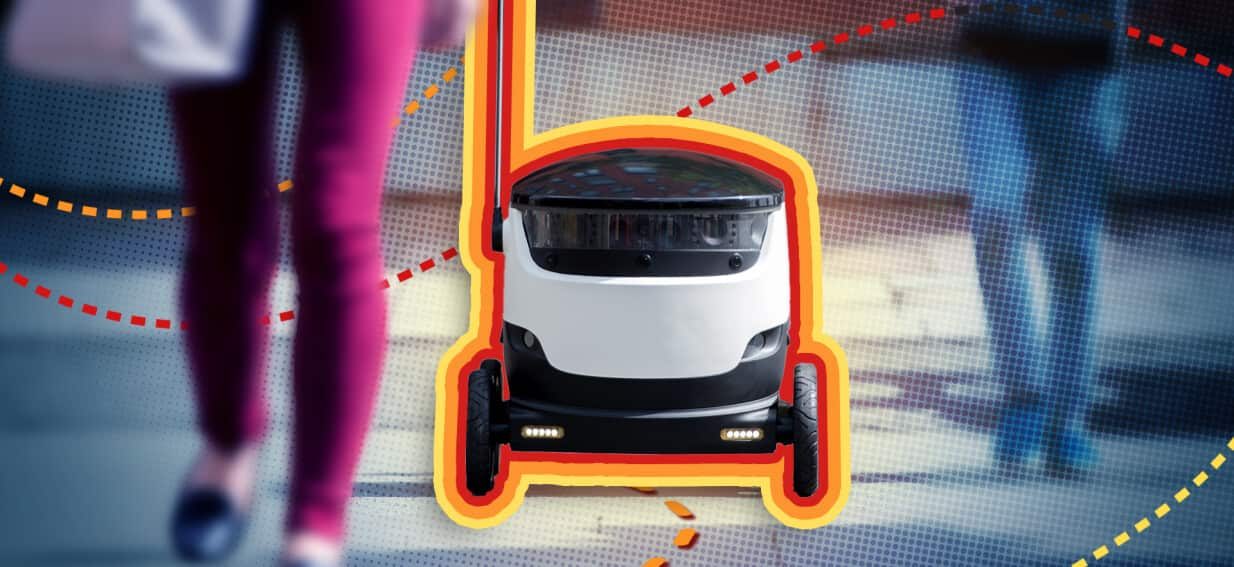
Autonomous delivery robots have begun navigating Australian footpaths, bringing high-tech convenience to suburban streets while sparking intense debate over pedestrian safety, public liability, and the prospect of suburban vandalism.
As reported by SBS News Top Stories, the arrival of the compact, wheeled couriers Down Under follows turbulent rollouts across North America and Europe, where the machines have faced public hostility alongside major operational failures.
Perils of the pavement
These cooler-sized autonomous pods—designed to ferry groceries, fast food, and parcels across short suburban distances—rely on cameras, radar sensors, and artificial intelligence to negotiate terrain. Yet their arrival on local footpaths presents immediate friction for urban planners and accessibility advocates.
Unlike motor vehicles confined to the carriageway, delivery robots occupy shared pedestrian spaces. Community representatives and disability advocates have raised concerns that these automated rovers will obstruct thoroughfares, creating hazards for vision-impaired pedestrians, parents with prams, and wheelchair users who already contend with cracked concrete and abandoned electric scooters.
Overseas collisions and anti-robot vigilantes
The technology's overseas record offers a cautionary tale. SBS News Top Stories reported that international deployments have seen autonomous units flattened by freight trains after becoming stranded at level crossings, trapped in roadside gutters, and struck by turning vehicles.
Beyond technical glitches, the machines have also become targets for public frustration. In several overseas cities, frustrated pedestrians and pranksters have tipped units onto their sides, spray-painted external camera lenses, immobilised them with adhesive tape, or raided their secure cargo holds. Some urban communities have treated the machines not as convenient couriers, but as corporate encroachment upon public space.
Regulatory hurdles on suburban kerbs
In Australia, deploying autonomous devices requires navigating a disjointed regulatory environment. State road authorities and municipal councils operate under varying legislation regarding personal mobility devices and non-human footpath users.
Questions remain regarding who bears financial responsibility when an automated unit causes injury or property damage. Under current transport regulations, legal definitions of a "pedestrian" vary significantly across state jurisdictions, creating ambiguity over right-of-way rules at driveways, zebra crossings, and signalised intersections. Operators maintain that remote human technicians can intervene via teleoperation if a unit encounters difficulty, but transport analysts question whether remote supervisors can react swiftly enough to avert traffic collisions.
The commercial rush to the last mile
Despite these challenges, commercial pressure to automate remains immense. The logistics sector regards "last-mile" delivery as the most expensive component of supply chain networks, with courier labour accounting for a significant share of fulfilment expenses. If autonomous pods can lower delivery costs for meals and parcels to just a few dollars, retailers and food platforms stand to secure substantial savings.
Whether Australian suburbanites will tolerate the mechanical couriers—or subject them to the same hostile reception witnessed overseas—remains an open question as initial trials expand across residential neighbourhoods.