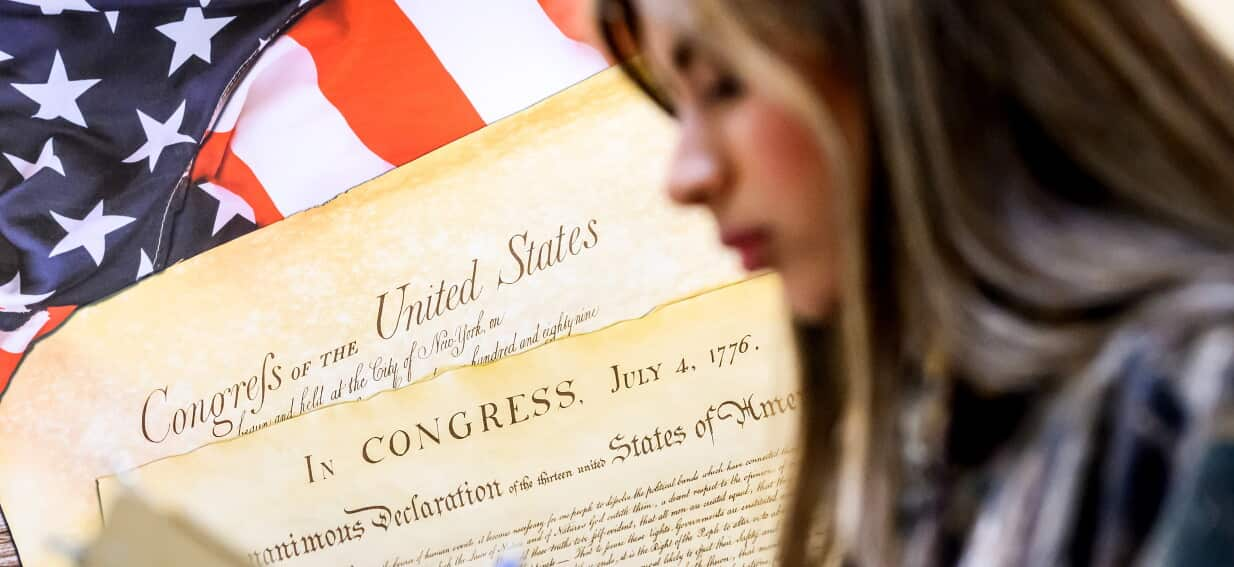
While international scrutiny remains fixated on the knife-edge battle for control of Washington, millions of American voters have cast ballots on deeply consequential issues that will reshape daily life across state lines.
Beyond the marquee races for the Senate and the House of Representatives, the midterm elections serve as a sweeping test of popular sentiment across the federation. SBS News Top Stories reported that alongside congressional seats, the electorate has been asked to decide on hundreds of contentious policy questions, constitutional amendments, and administrative offices that rarely capture foreign attention.
Reproductive rights tested at the ballot box
In the wake of the US Supreme Court's decision to overturn federal abortion protections, reproductive healthcare has emerged as one of the most mobilising themes on state ballots. Several states took the unprecedented step of allowing voters to directly determine the future of reproductive autonomy within their borders.
In progressive strongholds such as California and Vermont, voters were asked to explicitly enshrine the right to abortion and contraception into their state constitutions. Conversely, conservative jurisdictions, including Kentucky, put forward measures that would permanently strip constitutional protections for termination services, solidifying local bans. These referendums have effectively bypassed divided state legislatures, delivering a raw metric on public sentiment in a deeply polarising policy area.
Drug legalisation and criminal justice reforms
Voters also confronted substantial questions surrounding criminal justice reform and the commercialisation of illicit substances. Several jurisdictions weighed the legalisation of recreational cannabis, continuing a multi-year shift toward state-level decriminalisation despite ongoing prohibition at the federal tier.
Concurrently, voters in states including Alabama, Tennessee, and Vermont considered measures to formally excise antiquated slavery and involuntary servitude clauses from their constitutions. These legacy provisions had historically permitted forced labour as punishment for criminal convictions. The referendums highlight an ongoing reckoning with the foundational texts of various state governments, seeking to modernise penal codes and ensure prison labour standards reflect contemporary human rights norms.
Economic mandates and the minimum wage
Amid persistent inflation and escalating living costs, economic referendums featured prominently in several polling booths. A number of states and municipalities weighed proposals to index or substantially raise the base hourly wage.
In jurisdictions voting on pay thresholds, proposals sought to elevate minimum wages toward figures approaching $23 AUD ($15 USD) per hour, an adjustment intended to counter real-wage erosion among service-industry and casual workers. In broader labour contests, measures addressing collective bargaining rights and workers' compensation frameworks were placed before the public, testing whether union strength can expand outside traditional industrial corridors.
Defending the machinery of democracy
Perhaps the most consequential down-ballot contests were not ballot questions, but low-profile bureaucratic offices. Voters were asked to select secretaries of state and attorneys-general—officials directly responsible for administering voter rolls, validating electoral machinery, and certifying local tallies.
These administrative roles have been thrust into the national spotlight following disputed narratives surrounding electoral integrity. With future presidential contests hinging on state-level certification, the outcome of these lower-tier races may dictate how smoothly the 2024 general election proceeds. While the arithmetic of Congress dictates national legislative capacity, it is these down-ballot decisions that will fundamentally define the social and legal landscape for millions of citizens.