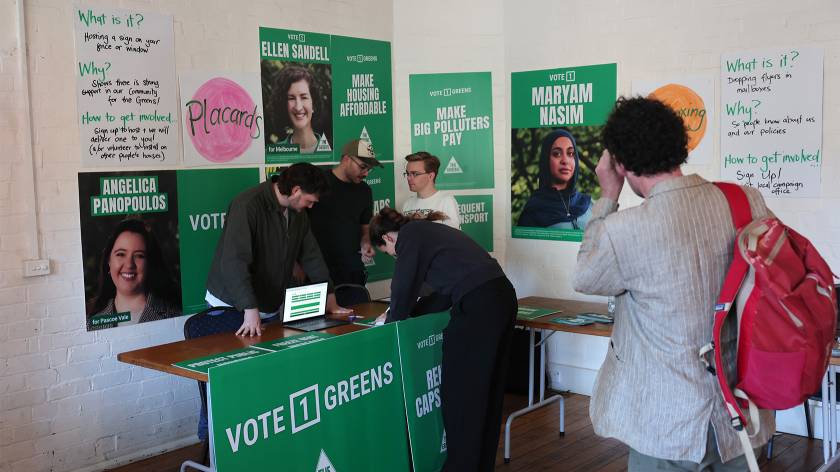
Spiralling household bills and soaring rents are forcing a quiet recalibration across Victoria’s political left, as material economic concerns rapidly displace symbolic cultural disputes ahead of the state election.
While substantial public attention has fixated on the resurgence of right-wing minor parties such as Pauline Hanson’s One Nation, an equally consequential realignment is unfolding on the progressive side of the aisle. According to an analysis published by independent news outlet Crikey, voter appetite for first-generation identity politics—often colloquially dubbed "woke 1.0"—has markedly waned among the Victorian electorate.
Instead, voters contending with relentless cost-of-living strains are demanding that progressive parties pivot their policy platforms toward tangible economic relief.
The shifting battleground of progressive politics
Over the past decade, Victorian politics developed a national reputation as the crucible for progressive social reform. From expansive social legislation to landmark environmental targets and public sector diversity initiatives, the state’s political discourse frequently centred on representation and social inclusion.
Yet, as Crikey reported, that framework is facing acute pressure under the weight of stubborn inflation, successive interest rate rises, and an unrelenting rental squeeze. Where progressive candidates once championed abstract cultural debates, the electorate’s gaze has narrowed sharply to household balance sheets.
In working-class suburbs and gentrifying inner-city electorates alike, candidates seeking to connect with young and progressive constituents are finding that identity markers carry little weight if disconnected from the reality of paying the rent.
Household balance sheets overshadow symbolic crusades
Energy bills, public transport fares, and the price of basic groceries are no longer peripheral concerns; they have become the primary lens through which voters evaluate government competency.
Crikey noted that while conservative commentators often characterise progressive politics purely through the prism of culture wars, progressive strategists are now recognising that voters across the spectrum are fatigued by symbolic gestures that deliver no material improvement to daily life.
The demand from the progressive base is increasingly rooted in universal economic security: funding for strained public hospitals, investment in social housing stock, and relief from utility costs.
Populist friction across Melbourne’s fringe
This recalibration comes at a volatile moment in Victorian electoral politics. Right-wing populist movements have sought to exploit suburban discontent, capitalising on public debt concerns and the lingering economic hangover of prolonged pandemic-era restrictions.
Crikey reported that while the rise of right-wing populism commands mainstream headlines, progressive parties risk alienating their traditional base through perceived complacency on bread-and-butter issues. In outer-metropolitan growth corridors, where mortgage stress is at its acute peak, cultural arguments often fail to register against the immediate pressure of rising repayments.
Reframing the progressive mandate
The resulting shift does not suggest that social equity has been abandoned entirely. Rather, the rhetoric is undergoing a structural overhaul.
Progressive advocates are increasingly reframing issues such as gender equality through the lens of economic necessity, focusing heavily on wage growth in female-dominated care sectors and affordable childcare. Similarly, climate policy is increasingly pitched around lower power bills and local manufacturing jobs rather than abstract moral imperatives.
As Victoria approaches the ballot box, the contest is moving decisively away from the culture wars that defined the past decade. For candidates on both sides, the decisive battleground is no longer who speaks for whom, but who can deliver relief to households feeling the pinch.