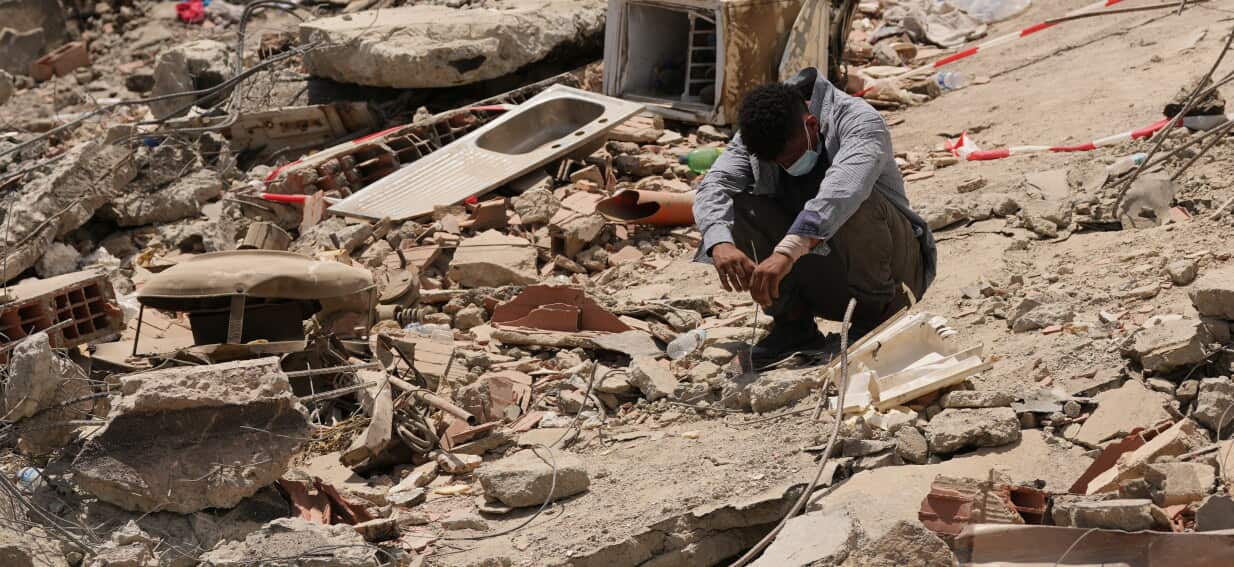
A three-year-old child is among three Palestinians killed in an Israeli airstrike on Deir el-Balah in central Gaza, an attack that starkly underscores the fragile nature of a supposed ceasefire and the ongoing human cost of the protracted conflict.
The strike, reported by Al Jazeera, occurred amidst escalating tensions and a pattern of what observers are calling 'ceasefire violations' that threaten to plunge the beleaguered strip back into full-scale conflict. The latest fatalities bring the unofficial death toll since the nominal truce began to a grim reminder of the region's instability.
Renewed Violence Shatters Brief Calm
The incident in Deir el-Balah involved an aerial bombardment that struck a residential area, according to local reports. While details remain sparse, the impact on civilian lives is undeniable, with aid agencies and human rights organisations expressing grave concerns about the welfare of Gaza's 2.3 million residents already facing dire conditions.
The Israeli military has yet to issue a definitive statement regarding the specifics of the Deir el-Balah operation. However, such strikes are typically framed by Israeli authorities as responses to perceived security threats or rocket fire from Gaza-based militant groups. This narrative often clashes with accounts from the ground, which frequently highlight the disproportionate impact on non-combatants.
Unravelling Truce Raises Alarm
The concept of a 'ceasefire' in the Gaza Strip has become increasingly cynical, with sporadic but deadly exchanges of fire a persistent feature of daily life. International mediators, including Egypt and Qatar, have invested considerable diplomatic capital into brokering understandings aimed at de-escalation. However, these agreements frequently appear to unravel under the weight of reciprocal actions and deeply entrenched grievances.
Analysts suggest that the frequent violations stem from a fundamental disagreement over the terms and scope of the ceasefire. Palestinian factions often demand a complete lifting of the blockade on Gaza and an end to Israeli incursions, while Israel maintains its right to respond to any security threats originating from the territory. This intractable conflict of objectives makes any lasting peace elusive and leaves civilians tragically caught in the crossfire.
Humanitarian Crisis Deepens Amidst Blockade
The recurring violence exacerbates an already acute humanitarian crisis in Gaza. The ongoing blockade, imposed by Israel and Egypt since 2007, has crippled the economy, decimated infrastructure, and left over 80% of the population reliant on humanitarian aid. Essential supplies, including medicine, clean water, and construction materials, are often scarce, with severe restrictions on movement creating an open-air prison-like environment.
Australia, through its foreign aid programmes, contributes to various humanitarian efforts in the Palestinian territories. For instance, in the 2022-23 financial year, Australia allocated approximately A$10 million in direct aid to the Palestinian people, primarily supporting basic services, food security, and emergency assistance through UN agencies and non-government organisations. However, the scale of donor fatigue coupled with the relentless cycle of violence means these contributions, while vital, often feel like a band-aid on a gaping wound.
International Calls for De-escalation
News of the Deir el-Balah strike has reverberated through diplomatic circles, with many nations reiterating calls for an immediate and sustained de-escalation. The United Nations and various human rights groups have consistently urged all parties to adhere to international law, protect civilians, and work towards a genuine political resolution to the decades-old conflict.
Without a concerted international effort to address the root causes of the Israeli-Palestinian conflict, and to ensure accountability for breaches of international humanitarian law, such tragic incidents are likely to continue, further entrenching a cycle of violence and despair in one of the world's most volatile regions.