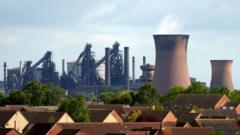
London: Chinese industrial giant Jingye Group is vowing to fight "to the very end" through legal channels after the British government nationalised British Steel, escalating a dispute that could have significant economic repercussions.
The extraordinary threat comes after the UK’s Conservative government intervened to take control of the struggling steelmaker, citing national interest. Jingye, which previously owned British Steel, has expressed outrage over the decision, demanding compensation and accusing the British government of acting improperly.
Beijing's Fury Surfaces
BBC Business reported that Jingye, one of China's largest privately owned steel manufacturers, issued a staunch statement, declaring its intention to launch legal proceedings. "Jingye will take action through legal means to the very end to protect its legitimate rights and interests," the company said in a strongly worded communication. The company had previously invested hundreds of millions of pounds into British Steel after acquiring it in 2020 following an earlier insolvency. Their efforts were aimed at revitalising the iconic but troubled manufacturer, which employs thousands in the UK.
The nationalisation has caught many by surprise, particularly given the UK's historical emphasis on free-market principles. Analysts suggest the move reflects growing geopolitical anxieties and a desire by Western nations to secure critical industrial assets. However, Jingye views it as a direct affront to its investment and contractual rights, potentially setting a precedent for other foreign-owned assets in the UK.
Compensation Claims and Economic Fallout
At the heart of Jingye's grievance is the demand for substantial compensation. While no specific figure has been publicly stated, experts estimate the claim could run into hundreds of millions, if not billions, of Australian dollars, factoring in lost profits, investment, and future business opportunities. Such a payout would represent a significant burden on the British taxpayer and could trigger a wider diplomatic spat between London and Beijing, already strained by other issues.
The nationalisation also raises questions about the future of British manufacturing and its attractiveness to foreign investment. If a major investor like Jingye can have its assets seized, even with promises of compensation, it could deter other international firms from injecting capital into UK industries. This concern is particularly salient for Australia, where several critical sectors, including mining and agriculture, attract considerable Chinese investment.
Geopolitical Ripples Down Under
The dispute in the Northern Hemisphere has not gone unnoticed in global financial markets or among Australian policymakers. While the immediate impact on Australian businesses is indirect, the broader implications for international investment law and the treatment of foreign-owned assets are significant. Observers in Canberra will be watching closely to see how this dispute unfolds, particularly given Australia's own complex economic relationship with China.
For British Steel, now under state control, the future remains uncertain. The government insists its intervention is to safeguard jobs and ensure the continuity of a vital strategic industry. However, the legal battle with Jingye, coupled with the inherent challenges of operating a large-scale steel producer in a competitive global market, suggests a difficult road ahead. The stage is set for a protracted and costly legal showdown that could reshape the landscape of international investment and trade relations.