An extraordinary 28-year odyssey across four continents has culminated in northern England, where veteran British adventurer Karl Bushby stepped through his mother's front door after walking entirely around the globe.
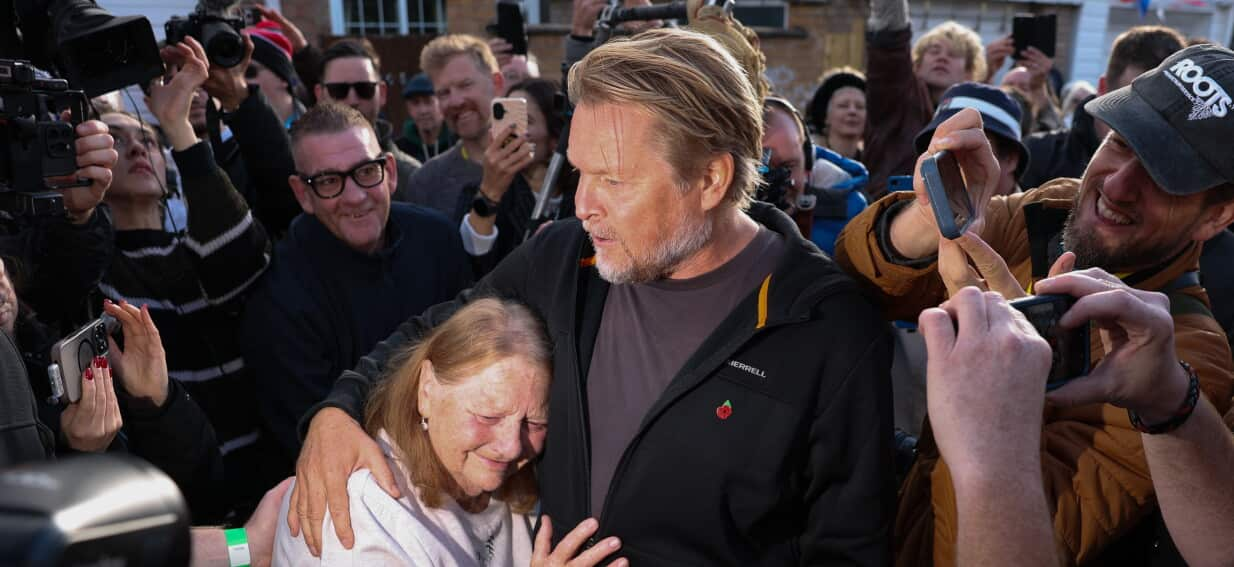
Bushby, a former British paratrooper now in his mid-fifties, concluded his monumental undertaking with an emotional embrace of his mother, SBS News Top Stories reported. The reunion marked the definitive conclusion of an expedition that began in the late 1990s and outlasted international conflicts, sweeping geopolitical realignments, and the digital transformation of the modern world.
Known formally as the Goliath Expedition, the journey was governed by an uncompromising premise: Bushby could not utilise any form of motorised transport to advance his position. Every kilometre had to be conquered on foot, establishing the endeavour as one of the most punishing individual endurance feats ever mounted.
An unbroken footpath from Patagonia to Hull
The journey commenced in November 1998 from Punta Arenas, situated at the windswept southern tip of Chile. Setting out with modest equipment and minimal financial backing, Bushby began charting a northward course through the Americas. He traversed the arid stretches of the Atacama Desert, the high-altitude passes of the Andes, and the dense, lawless jungles of the Darien Gap between Colombia and Panama—a route notorious for swallowing travellers and deterring even seasoned explorers.
Pushing northward through Central America, the United States, and Canada, he spent years navigating immense geographical barriers and punishing weather extremes. What was initially conceived as an expedition spanning a little over a decade evolved into a protracted, multi-decade test of physical endurance, isolation, and logistical patience.
Frozen straits and bureaucratic quagmires
Perhaps the most perilous chapter unfolded in 2006, when Bushby and a companion crossed the frozen Bering Strait from Alaska into the Russian Far East on foot. The crossing entailed navigating shifting sea ice, sub-zero gales, and open leads of freezing water over several weeks.
Yet the natural perils often proved secondary to administrative roadblocks. Upon reaching Chukotka, Russian authorities detained Bushby over visa irregularities. The resulting diplomatic and bureaucratic entanglements dragged on for years, repeatedly halting his forward progress and forcing extended delays as permits expired and geopolitical tensions flared. Despite setbacks that would have prompted most expeditions to fold, he persevered through Siberia, Central Asia, and eventually into Western Europe.
The toll of a quarter-century on the road
The financial realities of the expedition proved equally relentless. Without major corporate benefactors or modern social media sponsorship during its early phases, the venture relied heavily on intermittent public goodwill, the hospitality of strangers, and sheer resourcefulness. Over nearly three decades, Bushby missed countless familial milestones and the everyday rhythms of domestic life, effectively freezing his relationship with the home he left behind in 1998.
In an era dominated by hyper-connected travel and instant gratification, the trek stood apart as a rare relic of classic, slow exploration, where progress was measured not in digital impressions, but in worn-out boot leather.
A humble return to domestic normality
Crossing the English Channel and traversing the final stretch of northern English tarmac, Bushby reached his destination with little of the commercial fanfare that typically greets modern athletic records.
For his family, the emotional reunion represented profound relief after almost three decades of uncertainty. As Bushby embraced his mother on her doorstep, the man who had crossed ice sheets and desert plains stepped back into a society that had moved on without him, finally laying down his pack for good.